AI Tools for Marketing Content Creation: The Ultimate Guide 2026
Last Updated: February 6, 2026 TL;DR: Key Takeaways on AI Tools for Marketing Content Creation 55% of marketers now prioritize AI for content creation, saving 1...
Wilmer KarlssonTarstad
Last Updated: February 6, 2026
TL;DR: Key Takeaways on AI Tools for Marketing Content Creation
- 55% of marketers now prioritize AI for content creation, saving 1+ hour per piece
- Best tools combine speed with brand consistency: ChatGPT, Jasper, Canva, Descript lead in 2026
- The shift is from AI-assisted production to human-led co-creation with AI as your partner
- Authentic, human-first content beats AI-generated slop; use AI to amplify, not replace creativity
- Free tiers (ChatGPT, Canva, Rytr) now rival paid tools in quality; choose based on your workflow needs
Table of Contents
- What Are AI Tools for Marketing Content Creation?
- Why AI Content Tools Matter in 2026: The Shift to LLM Optimization
- Top AI Tools for Text and Long-Form Content Creation
- AI Tools for Social Media and Short-Form Content
- AI Tools for Visual Content and Design
- Free vs Paid AI Tools: What You Actually Need to Spend
- The Authenticity Problem: When AI Content Fails and How to Fix It
- Building Your AI Content Stack: A Workflow Strategy
- Frequently Asked Questions About AI Content Tools
- Getting Started: Your First 30 Days With AI Content Tools
- Conclusion: The Future of AI in Marketing Content Creation
What Are AI Tools for Marketing Content Creation? {#what-are-ai-tools-for-marketing-content-creation}
AI content creation tools are software platforms powered by machine learning that generate, optimize, and distribute marketing content across multiple formats. They work by analyzing patterns in existing content, understanding your brand voice, and producing written copy, social media posts, images, and video scripts in minutes instead of hours.
Unlike traditional marketing software that organizes or schedules content you've already created, AI tools actively participate in the creation process itself. They're not just scheduling assistants; they're collaborative partners that reduce the friction between your marketing strategy and actual output.
The numbers tell a compelling story. 55% of marketers now place content creation as their most popular AI use case, up 12% year over year, and 42% of marketing leaders use AI tools daily or a few times per week for content creation. The market itself is expanding rapidly; the global AI-powered content creation market was estimated at $2.15 billion in 2024 and is projected to reach $10.59 billion by 2033.
Why the explosive growth? Marketers face an impossible equation: audiences demand consistent, multi-channel content, but teams remain understaffed. AI tools solve this by accelerating production without requiring massive hiring. They handle repetitive tasks, brainstorm variations, and maintain consistency across platforms.
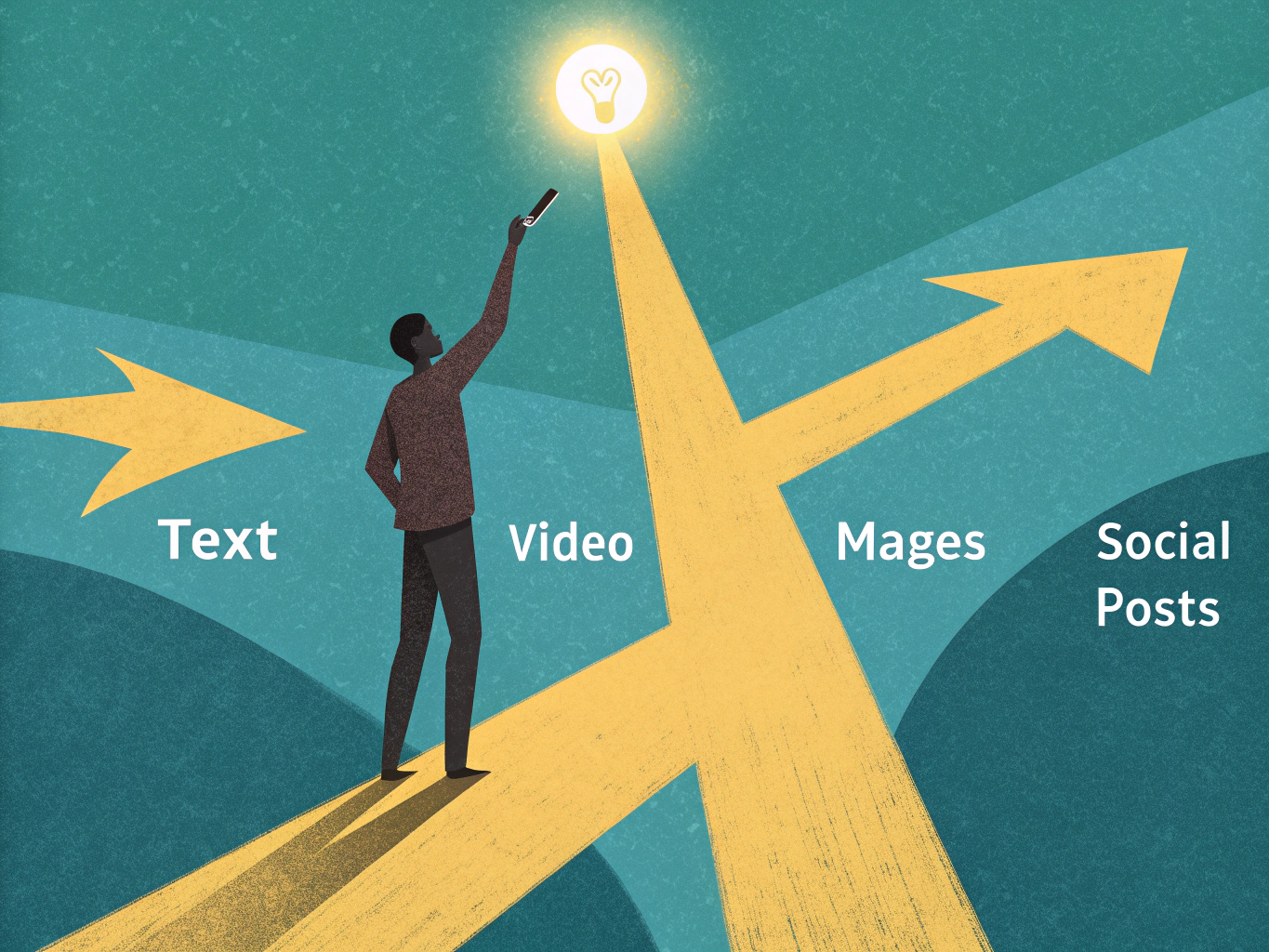
The real opportunity isn't replacing human creativity; it's amplifying it.
Why AI Content Tools Matter in 2026: The Shift to LLM Optimization {#why-ai-content-tools-matter-in-2026-the-shift-to-l}
The marketing landscape shifted in 2025, and 2026 demands you shift with it. Your buyers aren't searching Google the way they used to. They're asking ChatGPT, Perplexity, and Claude to research solutions, compare options, and validate decisions. That's not a trend; it's your new reality.
This shift changes everything about visibility. Search rankings matter less when your ideal customers aren't searching anymore. What matters now is whether AI models cite your content as authoritative. According to IDC's research on the shift from SEO to LLM optimization, visibility is increasingly measured by AI model citations rather than organic clicks. Your content needs to be the source AI recommends, not just the page Google ranks.
The numbers back this up. IDC predicts that by 2029, brands will allocate 5 times more budget to LLM optimization compared to SEO. Smart marketers aren't waiting until 2029 to adapt. They're starting now.
Here's where AI content tools become non-negotiable: they help you create the type of material AI models actually cite. Structured, comprehensive, factual content that answers real questions. This isn't about churning out volume; it's about strategic quality.
Your team also needs to evolve. Marketing teams are shifting from AI-assisted production to true co-creation with AI. That means your writers, strategists, and editors aren't being replaced; they're being amplified. The friction point isn't adoption anymore. It's choosing the right tools and workflows that fit how your team actually works.
Staying competitive in 2026 means acknowledging this shift and acting on it. You're not investing in AI tools to be trendy. You're investing because your buyers have already moved to where AI tools live.
Top AI Tools for Text and Long-Form Content Creation {#top-ai-tools-for-text-and-long-form-content-creati}
When it comes to writing blog posts, articles, and email campaigns, you've got solid options, but they're not all created equal.
ChatGPT and Claude dominate for good reason. Both produce genuinely strong long-form drafts that require minimal cleanup. ChatGPT wins on speed and accessibility; Claude excels at nuance and following complex instructions. Use ChatGPT when you need quick turnarounds on multiple pieces. Choose Claude when your content demands careful reasoning or you're working with sensitive topics that require precision. According to research, ChatGPT and Claude are standouts for long-form drafts, while Jasper excels for brand tone.
Jasper takes a different approach entirely. It's built specifically for marketers who need consistency across channels. If your brand voice matters more than raw speed, Jasper maintains tone and style across blog posts, social captions, and email sequences simultaneously. The tool boasts over 5,000 5-star product reviews and keeps vital SEO page scores high. The tradeoff: it costs more than ChatGPT and requires upfront time to train on your brand guidelines.
Copy.ai shines for repetitive, high-volume tasks. Email subject lines, ad copy, product descriptions, social media captions. It's fast and cheap, making it perfect for teams handling dozens of variations daily. Don't expect literary brilliance; expect solid, workable first drafts you'll refine quickly.
Brandwell solves a real problem: AI detection. If your audience scrutinizes content for AI fingerprints, Brandwell's output comes through at least 70% human-written, passing most detectors. It's valuable if authenticity perception is critical, though it's slower than alternatives.
The honest truth: 49% of U.S. companies currently use ChatGPT for marketing tasks, and most start there for good reason. But your choice depends on workflow priorities. Need brand consistency? Go Jasper. Speed and flexibility? ChatGPT. High volume, low stakes copy? Copy.ai. Authenticity concerns? Brandwell. The best tool matches your actual constraints, not just the features list.
AI Tools for Social Media and Short-Form Content {#ai-tools-for-social-media-and-short-form-content}
The real power of AI for social media isn't creating content from scratch; it's transforming what you already have into platform-specific gold. One piece of long-form content can become dozens of social posts, short videos, and captions tailored to where your audience actually spends time.
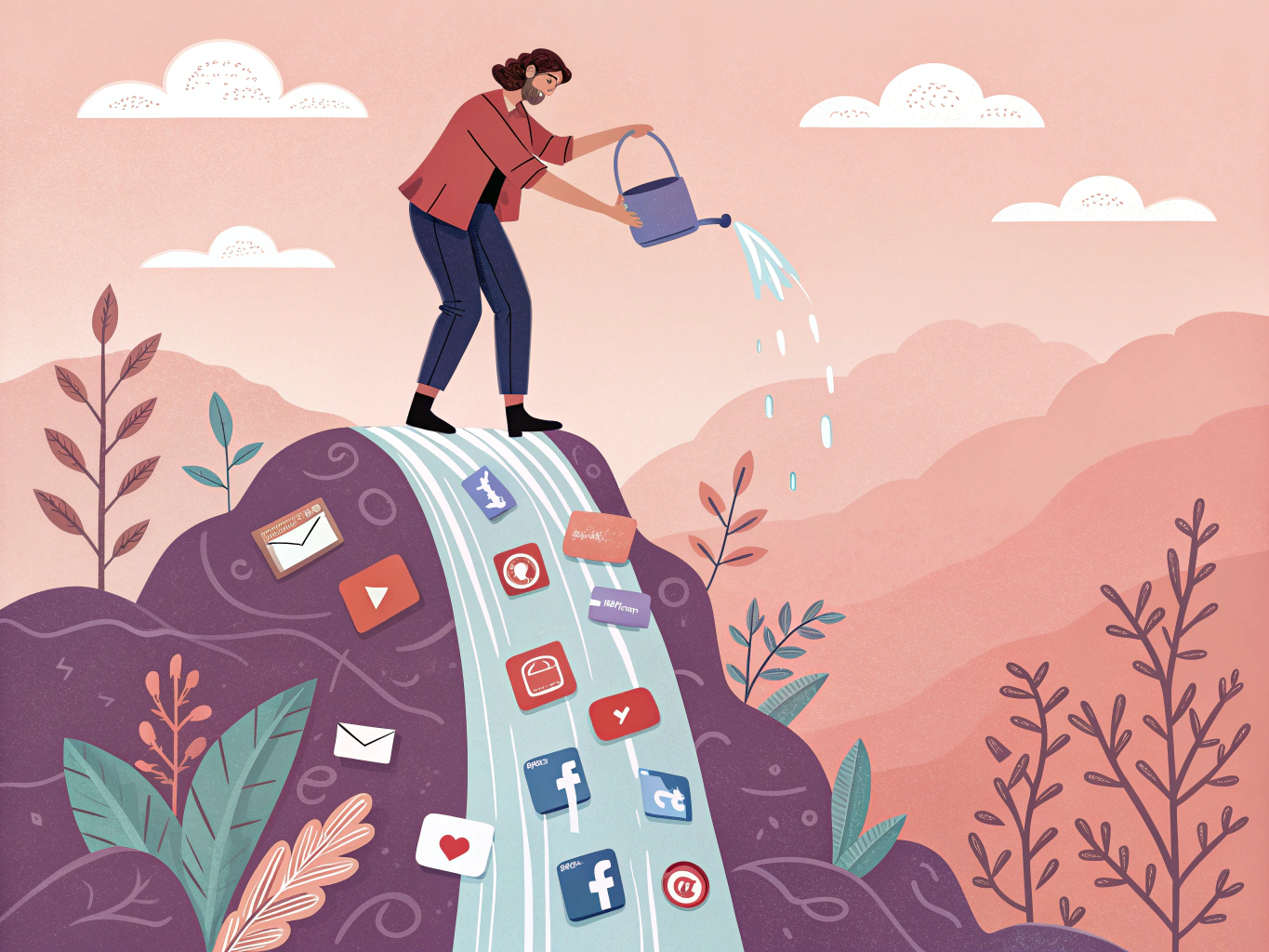
Descript handles the heavy lifting for podcasters and webinar hosts. Record once, and it automatically extracts short video clips, transcripts, and social snippets. This workflow saves hours compared to manual editing.
Lumen5 takes written articles or blog posts and converts them into animated videos optimized for LinkedIn in minutes. The platform understands that LinkedIn audiences respond differently to video than Twitter does, so it adjusts pacing and visuals accordingly.
For caption writing, Buffer and FeedHive both offer AI assistants that generate platform-specific posts from simple prompts. Type "announce our new feature" and get LinkedIn-professional, Twitter-witty, and Instagram-casual versions. Hootsuite's OwlyWriter does similar work, generating captions that match your brand voice across multiple channels.
The game-changer for LinkedIn specifically: AI-powered performance predictions. These tools analyze your network, timing, and historical engagement to suggest optimal posting times and content angles. This means less guessing and more strategic posting.
The catch? These tools work best when you feed them quality input. A poorly written blog post becomes a poorly written video script. Think of AI as your amplifier, not your writer. Set the direction, provide substance, then let automation handle the formatting and distribution across platforms.
Start by choosing one tool that matches your primary content format: podcaster? Use Descript. Blog writer? Try Lumen5. Multi-platform marketer? Buffer or Hootsuite give you centralized control. The best tool is the one you'll actually use consistently.
AI Tools for Visual Content and Design {#ai-tools-for-visual-content-and-design}
Visual content stops the scroll, but creating it used to require design skills you might not have. AI design tools have flipped that script entirely.
Canva AI's Magic Design feature is the fastest way to turn a text prompt into on-brand graphics and social posts. Feed it a description of what you need, and it generates multiple options in seconds. Canva's Magic Design can whip up on-brand graphics and social posts in no time, making it ideal for marketers who need speed without sacrificing polish.
For custom images that go beyond stock photo limitations, Midjourney and DALL-E let you describe exactly what you want. These tools excel when your brand needs specific visual styles or unique imagery that generic stock libraries can't provide. Adobe Firefly integrates AI-assisted editing directly into professional workflows, so designers can accelerate tedious tasks while maintaining full creative control.
If you're after photorealistic marketing visuals, Lexica Art creates some of the most realistic AI images for marketing content, with built-in optimization for social and web use.
Here's what actually matters: brand consistency. Without it, your visuals start looking random and dilute your message. Before touching any AI tool, document your brand guidelines, including color palettes, typography, visual style, and tone. Use these guidelines in every prompt you write. Reference them when reviewing generated images. Without strong brand guidelines, quality can slide with AI tools, so treat them as non-negotiable constraints, not suggestions.
Start with one tool and master it before expanding. The goal isn't replacing designers; it's giving everyone the ability to create professional visuals faster while keeping your brand unmistakably yours.
Free vs Paid AI Tools: What You Actually Need to Spend {#free-vs-paid-ai-tools-what-you-actually-need-to-sp}
Here's the honest truth: you don't need to spend thousands on AI tools to create solid marketing content. Free tiers have become genuinely competitive. ChatGPT's free version, Canva, and Rytr deliver quality that rivals paid competitors. The real gap between free and paid isn't about intelligence anymore; it's about volume and advanced features.
Consider your actual needs. If you're generating 5-10 pieces of content monthly, free tools handle that effortlessly. Scaling to 50+ pieces weekly? That's where paid plans make sense, offering higher word counts, faster processing, and priority support.
Research shows 86% of marketers save more than an hour on creative tasks using AI. That efficiency gain matters more than the tool's price tag.
Here's what works best: combine 3-4 free tools rather than betting everything on one expensive platform. Pair ChatGPT for copywriting, Canva for design, and a tool like Copy.ai for social media. This hybrid approach costs nothing initially while covering different content needs.
Before committing budget, use free trials. Most platforms offer 7-14 days of paid features at no cost. Test workflows, check output quality, and see if the tool fits your team's process.
The bottom line: start free, test thoroughly, and upgrade only when you genuinely hit volume or feature limits. Your budget should scale with your content output, not the other way around. Smart marketers spend strategically, not automatically.
The Authenticity Problem: When AI Content Fails and How to Fix It {#the-authenticity-problem-when-ai-content-fails-and}
Here's the section:
Let's be honest: AI-generated slop is everywhere. Generic, lifeless copy that reads like it was written by someone who's never actually talked to a human. And it's costing marketers real credibility.
The good news? This is exactly why authentic content has become your competitive advantage in 2026. When every brand is pumping out AI-written posts, the ones that sound like actual people with genuine expertise stand out. Content Marketing Institute experts confirm that authentic personal content will win against AI-generated content this year. The shift is already happening.
Here's what actually works: treat AI as your thinking partner, not your ghostwriter. 56% of marketers significantly revise AI-generated text, while 38% make minor tweaks. That's not failure; that's the process. Use AI for drafting, brainstorming, and getting past the blank page. Use humans for strategy, voice, and the judgment calls that matter.
The editing phase is where the magic happens. Strip out the robotic phrases. Add specific examples from your actual experience. Inject your perspective. Let your real voice come through. Brands doubling down on genuine expertise, real insights, and human connection will win in 2026. AI amplifies your best thinking; it doesn't replace it.
Building Your AI Content Stack: A Workflow Strategy {#building-your-ai-content-stack-a-workflow-strategy}
The real power of AI isn't in having the fanciest tools; it's in connecting people, processes, and existing systems so they actually talk to each other. Without that integration, even best-in-class tools create isolated silos that slow you down.
Here's how to think about your stack strategically.
Start with three core layers. First, choose one writing tool (ChatGPT, Claude, or a specialized platform). Second, pick one design tool with AI capabilities. Third, add a scheduling solution. This foundation prevents tool sprawl and keeps workflows simple. For solo creators, this might mean Notion plus Canva plus Buffer. Small teams need something slightly more robust: consider tools that sync with your existing CRM or project management system.
The connective tissue matters most. Digital asset management with embedded AI is foundational for consistency across channels. When your team can quickly access on-brand templates, color palettes, and past content, you eliminate friction and maintain voice. This is especially critical if you're managing LinkedIn presence across multiple team members.
Think ahead to agentic workflows. The next evolution involves multiple AI agents working together on your behalf, handling tasks from research to publishing. In 2026, tools like n8n and Google's Opal are making this accessible without requiring engineering expertise.
Enterprise teams need orchestration. Larger organizations should map existing tools first, then layer AI strategically. Don't replace what works; enhance it. Integration platforms can connect your email, CRM, content calendar, and analytics so data flows naturally.
The mistake most teams make: buying tools before mapping workflows. Reverse this. Document how your team actually works, identify the bottlenecks, then choose tools that solve those specific problems. Start simple, measure results, then expand thoughtfully.
Frequently Asked Questions About AI Content Tools {#frequently-asked-questions-about-ai-content-tools}
Will AI-generated content actually rank in search results?
Yes, absolutely. Google doesn't penalize AI content; it ranks based on quality, relevance, and usefulness. AI-generated content can absolutely rank in search results when properly optimized. The catch? You need to treat it like any other content: verify facts, add original insights, optimize for keywords, and ensure it actually solves a reader's problem. AI is your starting point, not your finish line.
Is my marketing team going to be replaced?
No. Here's what actually happens: When used correctly, AI gives marketing teams better insight, better tools, and more time to focus on strategy and creativity. Your copywriter doesn't disappear; they become a strategist who shapes AI outputs. Your social media manager stops writing basic captions and focuses on engagement strategy. The jobs evolve, they don't vanish.
How do I avoid plagiarism and copyright issues?
Always verify what the AI generates. Run content through plagiarism checkers, cross-reference facts against original sources, and add your own perspective and examples. Most AI tools have terms of service that address commercial use. Most free tiers restrict commercial use; check each tool's terms of service. Paid versions typically grant you usage rights, but read the fine print for your specific tool.
Should I disclose when content is AI-generated?
Best practice is transparency. If you're publishing content that's entirely AI-written with minimal human input, disclose it. This builds trust with your audience and keeps you ahead of potential regulations. If AI is just one part of your creation process (outlining, editing, brainstorming), you don't need to flag every sentence. The transparency rule is simple: would your audience want to know?
Is there a steep learning curve?
Modern AI tools are surprisingly intuitive. Most marketers are productive within a few hours of experimenting. The real learning curve isn't the software; it's understanding how to write effective prompts and when to use which tool. Spend time testing, and you'll quickly develop instincts for what works.
Are these tools actually worth the cost?
It depends on your volume. If you're creating dozens of pieces monthly, even paid tools pay for themselves through time saved. If you're publishing sporadically, free versions often suffice.
Getting Started: Your First 30 Days With AI Content Tools {#getting-started-your-first-30-days-with-ai-content}
You don't need a perfect strategy to start. You need momentum.
Week 1: Pick Your Tools Choose one writing tool (ChatGPT, Claude, or Jasper) and one design tool (Canva, Adobe Firefly). Create free accounts and spend 30 minutes exploring each. Don't overthink it. Most tools offer free trials; test before committing budget and see which ones fit your workflow. Write down what feels intuitive and what doesn't.
Week 2: Create and Compare Write 3-5 pieces using your chosen writing tool. Here's the critical part: edit everything heavily. Don't publish AI output directly. Compare outputs from different tools on the same brief. Notice which tool understands your brand voice better. This week builds your intuition about what each platform does well.
Week 3: Measure Time Savings Integrate your chosen tool into your actual workflow. Track how long each piece takes from brief to final edit. Compare this to your pre-AI timeline. Most marketers see 30-50% time savings by week three, though your mileage varies.
Week 4: Evaluate and Decide Review your metrics: time saved per piece, quality improvements, team feedback, and audience engagement. Did your open rates change? Did publishing frequency increase? Keep what works. Replace what doesn't. Build your stack intentionally, not randomly.
The key to success is using AI as a starting point, not a final product. Small wins compound. By month two, you'll have real data about what actually works for your business, not what vendors promise.
Conclusion: The Future of AI in Marketing Content Creation {#conclusion-the-future-of-ai-in-marketing-content-c}
We're at an inflection point. As we move through 2026, the brands pulling ahead aren't the ones throwing maximum AI at every problem. They're the ones treating AI as a creative amplifier, not a replacement for human judgment.

Here's what actually works: start small with one or two tools that align with your workflow. Test them ruthlessly. Build your unique stack gradually, based on what your team needs, not what's trending. The competitive edge belongs to those who can blend authenticity with efficiency, who know when to let AI handle the heavy lifting and when human insight makes all the difference.
Your audience can feel the difference between content that's been thoughtfully co-created with AI and content that's just been generated. They respond to the human perspective underneath.
The future isn't about choosing between human creativity and AI capability. It's about mastering both. Start experimenting today, document what works, and build the content engine that gives your voice real reach. Your next breakthrough is waiting on the other side of that first test.