AI Tools for Social Media Content Creation: Complete 2025 Guide
Why AI Content Creation Tools Matter Right Now The math is simple: most social platforms now demand a consistent presence that's nearly impossible to maintain m...
Wilmer KarlssonTarstad
Why AI Content Creation Tools Matter Right Now
The math is simple: most social platforms now demand a consistent presence that's nearly impossible to maintain manually. Brands should aim to make between 48 and 72 posts per week across platforms, and that's just to stay competitive. Add in the need for different formats, audience segments, and platform-specific optimization, and you're looking at a content operation that would require a small team working full-time.
This is where AI tools stop being optional.
According to Sprout Social's 2025 research, 97% of marketing leaders say AI proficiency is vital for proper job performance. That's not hype. That's the market telling you that creators without AI in their toolkit are falling behind. The shift has already happened; adoption moved from experimental to essential sometime in 2024.
But here's what matters more than the statistics: the actual problem these tools solve. You're not trying to replace yourself with AI. You're trying to spend less time on repetitive tasks and more time on strategy, storytelling, and genuine connection with your audience. When you can generate a first draft, outline, or visual concept in minutes instead of hours, you reclaim the mental energy for the work that actually moves the needle.

79% of creators report that AI enables them to produce more content faster, which translates directly to reach and consistency. The real opportunity isn't about automation for its own sake; it's about scaling quality without burning out. That's why understanding which tools actually work, how to use them strategically, and where human judgment still matters is no longer nice-to-know. It's essential.
The AI Content Creation Landscape in 2025
The AI content creation market has matured dramatically. What started as a handful of experimental tools has evolved into a structured ecosystem with clear categories, each serving different needs.
Today's options break into three distinct tiers. General-purpose AI models like ChatGPT and Claude excel at brainstorming, drafting, and ideation. They're flexible but require more hands-on direction. Marketing-specific platforms such as Jasper and Copy.ai come pre-trained on brand voice and sales copy, reducing iteration cycles. Platform-native tools from Buffer and Hootsuite integrate directly into your workflow, handling scheduling and basic copywriting without context-switching.
The real shift from 2024 to 2025 is abandonment of the "one tool solves everything" myth. Teams now layer specialized tools rather than hunting for a single solution. You might use Claude for long-form strategy, a dedicated image generator for visuals, and native platform tools for scheduling. This modular approach takes more setup but delivers better results because each tool handles what it does best.
Enterprise adoption validates this maturity. 75% of enterprise marketers are now using GenAI to create and manage content, and 82% of businesses use AI in some form to boost their work processes. This isn't early adoption anymore; it's standard practice.
The complexity trade-off is real, though. More options mean more decisions. You'll spend time evaluating tools, integrating them, and training your team on each platform. The payoff comes when you stop treating AI as a replacement for creativity and start using it as a force multiplier for the work humans do best. That's where practical results emerge.
Best Free AI Tools for Social Media Content Creation
You don't need a paid subscription to start building a solid content creation workflow. Several free tools can genuinely move the needle, especially when you combine them strategically.
ChatGPT's free tier remains your most versatile starting point. Use it for brainstorming post angles, drafting captions, and developing content themes. It won't create images or schedule posts, but for the thinking work that precedes everything else, it's hard to beat. The limitation: responses cap at a certain length, and you won't access the latest models without upgrading.
Google Gemini excels where ChatGPT sometimes struggles. Gemini is particularly strong at brainstorming and research, and since it's free, it's perfect as a secondary tool for ideation. Use it for competitor research, trend spotting, or when you need a different creative angle on the same topic.
For visuals, Canva's free version with Magic Design removes the biggest barrier to consistent posting. Canva's AI integration makes design accessible, letting you upload an image or write a prompt and get multiple design variations instantly. You'll hit occasional limitations on premium elements, but the free library is surprisingly robust.
Buffer's social post creator is genuinely free to use. Buffer offers unlimited free AI-generated posts with a free account, making it practical for drafting multiple posts at once. Predis.ai offers similar functionality, combining post generation with basic scheduling capabilities.
The honest truth: free tools work best as building blocks, not complete solutions. You'll likely hit a ceiling where paid upgrades become necessary as your posting frequency or audience size grows. But starting free means you can test your workflow, understand what actually works for your audience, and invest confidently when the time comes.
The key is treating these tools as your starter stack. Use them to validate your content strategy before committing budget elsewhere.
Top Paid AI Tools: What You're Really Paying For
When you're ready to move beyond free tools, paid options offer specialized features that justify their cost through consistency and speed. The question isn't whether to upgrade, but which tool matches your workflow.
Jasper ($39-125/month) leads for marketing-specific templates and brand voice consistency. Jasper boasts over 5,000 5-star product reviews and excels at maintaining your brand tone across multiple posts. If you're managing content across channels and need reliable voice consistency, the investment pays back quickly through reduced editing time.
SocialBee ($99-399/month) bundles AI writing with scheduling and analytics. Rather than juggling separate tools, you get content generation, posting calendar, and performance tracking in one platform. This consolidation matters if you're managing multiple client accounts or channels; you'll spend less time switching between apps and more time on strategy.
Rytr ($9/month) is the budget option for short-form content. Rytr specializes in generating quick, polished content, especially for social media posts. At this price point, it's worth testing if you need rapid iteration on captions, headlines, or LinkedIn updates.
Copy.ai and Writesonic ($19-99/month) excel at generating multiple variations quickly. If your workflow requires testing different angles or tones before publishing, these tools reduce the friction significantly. You're paying for speed and flexibility, not necessarily sophistication.
Here's the ROI calculation: 90% of businesses using generative AI report significant reductions in production time. If you spend 10 hours weekly on content drafting and AI cuts that to 4 hours, a $50-100 monthly tool pays for itself in recovered time alone. Add in consistency gains and fewer editing rounds, and the math works.
The real cost isn't the subscription. It's the learning curve and integration into your existing process. Most paid tools offer 7-14 day trials; use them to test against your actual workflow. Don't pay for features you won't use. A $9 tool you actually leverage beats a $99 platform gathering dust.
Start with the free tier of your top choice. Upgrade only when you hit its limits, not when marketing copy suggests you should.
ChatGPT vs. Jasper vs. Claude: Which Tool for Which Job
The three tools dominate conversations about AI writing, but they solve different problems. Understanding where each excels beats chasing whatever's trending.
ChatGPT is your generalist. It's flexible, widely available, and offers a free plan, making it accessible for testing. The catch: it requires serious prompting skills to produce marketing-quality output consistently. You're essentially training the model on the fly, which works if you know what you're doing but wastes time if you don't. ChatGPT shines for brainstorming, refining rough drafts, and handling tasks outside pure marketing. Many creators use it as their thinking partner before moving to specialized tools.
Jasper speaks marketing fluently. Built specifically for creators and agencies, it includes templates for social posts, ad copy, SEO optimization, and conversion-focused writing. Brand voice features let you train it on your tone, reducing iteration cycles. Starting at $39/month, it costs more than ChatGPT but delivers faster results for marketing teams. The tradeoff: it's optimized for shorter-form, performance-driven content rather than long-form storytelling.
Claude prioritizes accuracy and nuance. It produces fewer hallucinations and shows greater caution about factual claims, making it ideal for research-heavy content, thought leadership pieces, and anything where credibility matters. Claude handles complex arguments better than competitors and catches its own uncertainties. It's excellent for B2B creators who need depth and precision.

The practical reality: most teams don't choose one. A content creator might use Jasper for quick social posts, Claude for detailed guides, and ChatGPT for brainstorming. Your choice depends on content type, team size, and budget. ChatGPT wins on accessibility and cost. Jasper wins on speed for marketing creators. Claude wins on quality for nuanced work. Start with what fits your immediate need, then expand strategically as your process clarifies.
AI Tools for Video and Visual Content
Video content now drives the majority of social media engagement, yet many solo creators assume they need expensive equipment and production teams to compete. They don't. The latest AI video tools have fundamentally changed what's possible for individuals working alone.
Start with Descript if you're sitting on recorded content. The platform automatically transcribes your podcasts, webinars, or long-form videos, then uses AI to generate short-form clips optimized for social platforms. You're essentially getting a content multiplier: one 60-minute recording becomes five to ten shareable pieces without manual editing. It also generates YouTube descriptions, social posts, and highlight reels, extending your content's reach considerably.
For creating videos from scratch, Sora (OpenAI's text-to-video tool) removes a major barrier. You describe a scene in plain English, and it generates short videos suitable for social media or presentations. The quality continues improving, and the speed is genuinely remarkable. While it's not replacing professional videographers yet, it eliminates the blank-canvas paralysis many creators face.
Canva's Magic Design feature handles the visual side efficiently. Feed it a topic or brand guidelines, and it generates on-brand graphics in seconds. Runway offers similar capabilities for more advanced video editing, including AI-powered effects and background removal that previously required specialist knowledge.
Here's what matters: over 62% of marketers using AI tools for video production report that text-to-video platforms cut their creation time by more than half. That's not incremental improvement. That's structural change.
The catch? These tools work best when you have clear direction. Vague prompts produce mediocre results. But if you know what message you're sending, these platforms let you execute it without waiting for budgets or hiring decisions. Video creation has moved from optional to essential, and AI has made it accessible to creators operating solo. That's genuinely worth paying attention to.
Building Your AI Content Stack: Strategy Over Tools
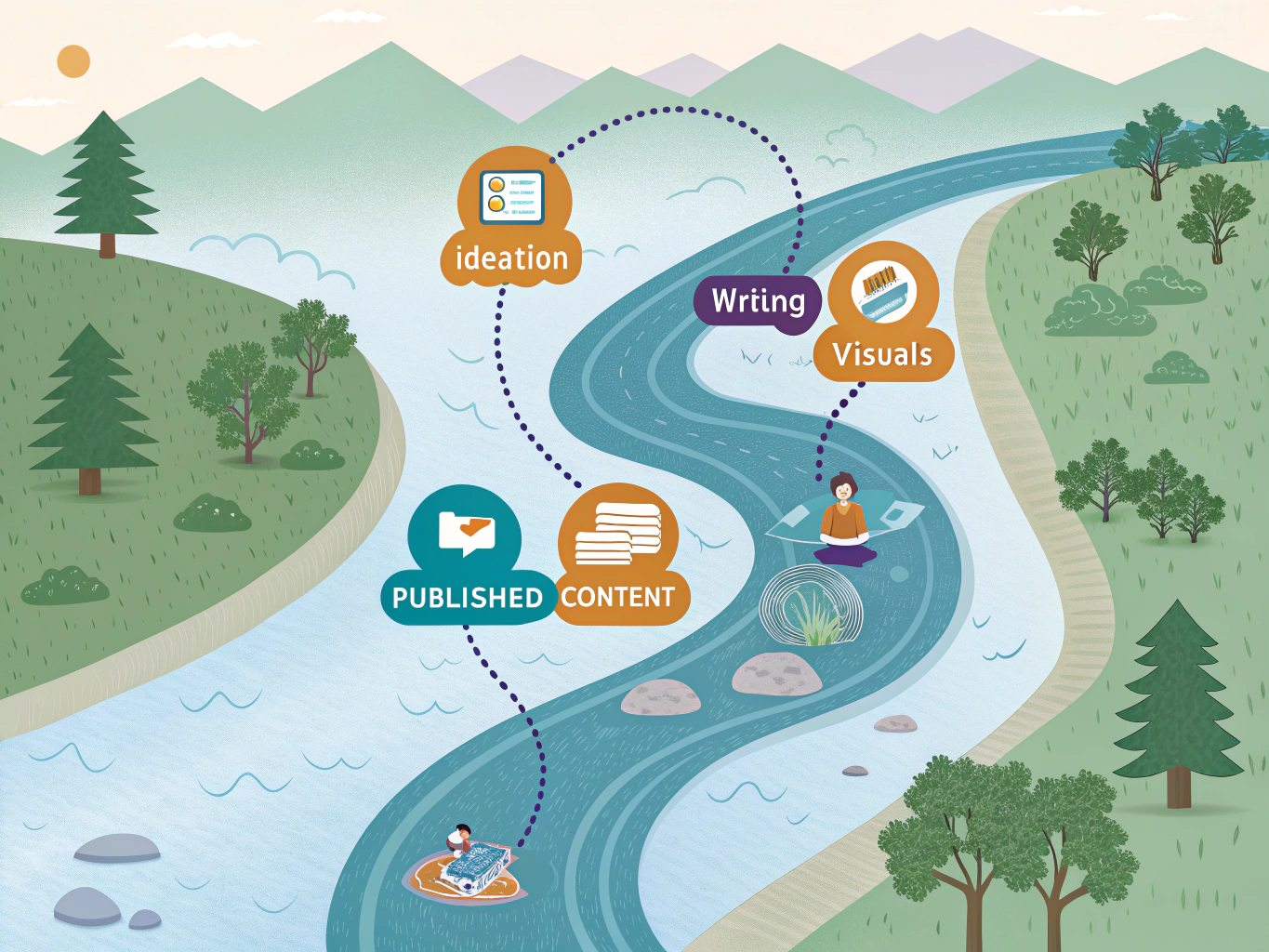
The mistake most creators make is treating AI tools like a single solution. They pick one platform, expect it to handle everything, then get frustrated when it falls short. The reality is simpler: the best stack uses different tools for different stages of your workflow.
Think of it like a kitchen. You wouldn't use a chef's knife to dice onions and blend smoothies. You need the right tool for each task. The beauty of having multiple AI tools isn't about finding the one perfect tool, it's about knowing which tool excels at which task and building a workflow that leverages each one's strengths.
Here's what this looks like in practice. A solo B2B creator might use ChatGPT or Gemini for ideation and outlining, then move to Jasper for polished writing that matches their brand voice. From there, they schedule everything through Buffer. Three tools, one smooth workflow. A small team might add Surfer SEO to the mix. When you connect Surfer SEO to Jasper, you get ranking data for the article you're writing, so you can keep search engine visibility in mind without hopping between tools.
An agency managing multiple clients needs more sophistication: ideation tools, specialized writing platforms, visual generation, scheduling, and analytics. But even then, most successful agencies use between 4 and 6 tools regularly, not ten.
The key principle: start minimal. Begin with one or two tools that address your biggest bottleneck. As you identify where time slips away, add the next tool. Integration matters more than individual tool quality. A mediocre tool that connects to your existing workflow beats a brilliant tool that requires manual data transfer.
The real secret sauce is expertise plus the right tools. Your knowledge of your audience and brand voice remains irreplaceable. AI handles the repetitive parts, freeing you to focus on strategy and refinement.
The Human Element: Why AI Isn't a Replacement
Here's the honest truth: AI tools generate drafts, not finished content. They handle maybe 60-70% of the heavy lifting, but that final 30-40% still requires a human being who actually understands what they're doing.
The gap matters most when it comes to brand voice. Research shows that AI tools can adapt to and reflect a brand's unique tone, but "adapt" doesn't mean "nail it." AI produces competent content that sounds like competent content. It rarely produces something that feels distinctly yours. That's where judgment comes in. You know which jokes land with your audience, which topics spark real conversations, and which angles feel authentic versus manufactured.
There's also the cultural nuance problem. AI still struggles with cultural sensitivities, context-specific references, and the kind of situational awareness that prevents embarrassing missteps. A tool can't know that a particular phrase carries unintended weight in your industry, or that your audience will immediately spot when you're trying too hard.
The biggest risk is automation creep. When every post gets generated without real thought, your feed starts looking like everyone else's feed. Your competitors use the same tools, the same templates, the same outputs. You become forgettable.
The creators actually winning with AI aren't replacing themselves. They're using these tools as collaborators. They prompt thoughtfully, edit ruthlessly, and maintain human oversight throughout. They catch the weird phrasing, the missing context, the claims that need verification before posting.
Your role isn't to disappear. It's to become the quality control layer that makes AI output actually work for your brand.
Getting Started: A 30-Day AI Content Creation Plan
Getting started doesn't require a massive investment or months of planning. Here's a realistic 30-day framework that builds momentum without overwhelming you.
Week 1: Explore Free Tools Start with ChatGPT's free version and Canva's free tier. These are your testing ground. Create five social posts across different formats: a LinkedIn article outline, a Twitter thread, a carousel concept, a caption with hashtags, and one video script idea. Don't worry about perfection. The goal is understanding what prompts work and what output actually fits your voice.
Week 2: Test Paid Alternatives SocialBee offers a 14-day free trial to test their AI post generator alongside scheduling features. Jasper provides a seven-day trial if you want to explore a dedicated content platform. Compare the quality of outputs, ease of use, and how well each tool understands your brand voice. Create seven posts using your preferred trial tool.
Week 3: Build Your Workflow Select two or three tools that clicked with you. Map out your actual process: how content moves from ideation through creation to publishing. This isn't about perfection; it's about identifying where AI genuinely saves time versus where human judgment matters most.
Week 4: Measure and Decide Track one metric that matters: time spent creating content and engagement on AI-assisted posts. Don't obsess over output volume. Decide which paid plans justify their cost based on real time savings and performance, not features you won't use.
The Future of AI and Content Creation
The next 18 months will separate the strategists from the tool collectors. Agentic AI capabilities, exemplified by ChatGPT's Operator feature, represent the next frontier and will handle complex, multi-step content workflows without human intervention. Imagine setting up a system that researches your audience, drafts three content angles, generates supporting visuals, and schedules posts across platforms, all while you focus on strategy. That's coming sooner than you think.
Multimodal generation is shifting from novelty to necessity. Tools that seamlessly combine text, images, and video in one workflow will become standard. The friction of toggling between five different platforms will disappear. But here's what won't change: authenticity will become your actual moat.
As AI commoditizes content production, human connection becomes scarce and valuable. The creators who win won't be those with the fanciest tools; they'll be the ones who use AI to amplify their unique perspective, not replace it. They'll generate five concepts in minutes, then spend their time refining the one that feels true to their voice.
Over 80% of social media content recommendations are powered by AI, significantly improving user retention rates, which means your content still needs to compete in algorithmic feeds. But quality beats quantity in those feeds now. One thoughtful, authentic post outperforms five generic ones.
The competitive advantage comes from implementing AI strategically. Early adopters who master the intersection of AI efficiency and human creativity will build advantages that new tools alone can't replicate. The question isn't whether to use AI. It's whether you'll use it to work smarter or just faster.