What Are Impressions on LinkedIn? Definition, Tracking, Growth
Wilmer KarlssonTarstad
Last Updated: March 18, 2026
Key Takeaways
- LinkedIn impressions are the number of times your content appears on someone's screen, measured when visible for 300ms with 50% in view
- Impressions measure visibility and reach, not engagement; focus on views, clicks, and conversions for real business impact
- Organic impressions come from natural algorithm distribution; paid impressions require advertising investment
- Most posts earn 70-80% of impressions in the first 24 hours; post timing and content format significantly affect impression volume
- Track impressions in LinkedIn Analytics to identify top-performing content types and optimize your posting strategy for growth
What Are Impressions on LinkedIn? Definition and Basics
An impression on LinkedIn is counted every time your content appears on someone's screen, even if they don't interact with it. Technically, an impression is the number of times content is visible for at least 300 milliseconds with at least 50% of the update in view. That's it. Your post doesn't need to be liked, commented on, or shared. It just needs to be seen.
Here's what makes this important: impressions are the foundation metric that precedes everything else on LinkedIn. They measure pure visibility, nothing more. You can't have engagement without impressions first, which is why tracking this number matters for understanding your content's reach on the platform.
The mechanics are straightforward. Every time your post loads in someone's feed, that counts as one impression. If the same person scrolls past your content three times over a week, that's three separate impressions. LinkedIn counts them independently, regardless of whether the viewer engages or even remembers seeing your post. This is why your impression count can be significantly higher than your engagement metrics like comments, reactions, or shares.

Understanding this distinction is crucial. Impressions measure exposure, not engagement, which means a high impression count tells you your content reached people, but says nothing about whether it resonated with them. That's why serious professionals track impressions as a starting point for analyzing content performance, then dig into engagement metrics to understand what actually moved their audience.
Impressions vs Views vs Reach: Understanding the Difference
These three metrics get tangled up constantly, and it's costing creators real insights into what's actually working. Let's untangle them.
Impressions are the baseline metric. They measure every single time your content appears on someone's screen, whether they engage with it or not. If your post shows up in Sarah's feed on Monday and again on Wednesday, that's two impressions. Impressions represent potential visibility, the opportunity for someone to see what you've posted. They're passive by nature; the person doesn't have to do anything for the count to register.
Views require action. A view happens when someone actively clicks on your content, watches a video, or opens an article you've shared. Impressions measure potential visibility while views capture real action. This distinction matters enormously because views signal genuine interest. Someone scrolling past your post counts as an impression; someone stopping to read it counts as a view.
Reach (or "members reached") counts unique individuals, not total displays. This is crucial. If the same person sees your content three times, that's three impressions but only one reach. Members reached refers to unique individuals who have seen your post, unlike impressions which count every display. Reach tells you how many different people encountered your content at all.
Here's why this matters for your growth strategy. High impressions with low views signals a problem: your content isn't compelling enough to stop the scroll. You're getting visibility but not capturing attention. Low reach with decent impressions means the same people keep seeing your content repeatedly, which suggests you're not expanding your audience.
Track all three metrics together, not in isolation. Impressions show your distribution strength, views reveal content quality, and reach indicates audience expansion. When you understand what each metric actually measures, you can diagnose performance issues quickly and adjust your approach. For deeper insights on leveraging these metrics, explore LinkedIn engagement tips to maximize your content's impact.
Types of LinkedIn Impressions: Organic, Paid, and Viral
LinkedIn's algorithm distributes impressions in three distinct ways, and understanding each type helps you build a more strategic content approach. Think of them as different channels to reach your audience, each with unique mechanics and ROI implications.
Organic impressions happen when your content naturally spreads through LinkedIn's algorithm without any advertising budget. These impressions reflect genuine interest in your message. When someone in your network engages with your post, it appears in their connections' feeds, creating a ripple effect. The advantage here is clear: you're only paying with your time and effort, making organic impressions the most cost-efficient option. The trade-off? They depend entirely on content quality and timing. You can't force reach; you can only optimize for it.
Paid impressions come from LinkedIn's advertising platform, where you invest budget to show content to specific audiences. Paid impressions typically cost between $6-9 per 1,000 impressions, though this varies by industry and targeting specificity. The real power here is precision. You control who sees your content based on job title, industry, company size, and more. This matters for B2B marketers targeting decision-makers. The downside is the cost; you're essentially buying visibility rather than earning it.

Viral impressions occur when your content spreads beyond your immediate network because people genuinely want to share it. These aren't guaranteed or easily manufactured. They happen when your message resonates so strongly that strangers amplify it. Viral impressions are the holy grail because they combine organic credibility with exponential reach.
The most effective LinkedIn strategy doesn't choose one type; it combines them. Use organic efforts to build credibility and test messaging. Deploy paid impressions to accelerate reach for your best-performing content. Then create space for viral moments by focusing on authenticity and value. This layered approach maximizes both your reach and your return on investment.
Why LinkedIn Impressions Matter for B2B Growth and Visibility
If you're serious about B2B growth on LinkedIn, impressions aren't a vanity metric to ignore. They're the foundation of everything that comes next.
Here's why: impressions reveal your ability to reach your target audience and establish expertise in your space. When your content gets in front of the right people, LinkedIn's algorithm notices. More impressions from the right people equals more qualified engagement and higher impression rates signal content quality, which means the platform actively pushes your future posts to wider audiences. It's a compounding effect; better reach leads to better visibility, which leads to even better reach.
For founders, creators, and sales professionals, this matters enormously. Brand awareness doesn't happen in a vacuum. People need to see your name, your ideas, and your perspective repeatedly before they trust you enough to engage or buy. Impressions are how you build that familiarity. They're the stepping stone between being unknown and being recognized as someone worth listening to.
But here's the practical reality: timing is everything. Most posts receive 70-80% of their total impressions on the first day. This means your content either gains momentum quickly or it fades. Understanding this window helps you post strategically, respond to early comments faster, and capitalize on that critical first 24 hours.
Impressions are also your first filter in the engagement funnel. You can't convert someone who never saw your post. Without visibility, even exceptional content goes nowhere. By tracking impressions alongside engagement metrics, you gain clarity on what resonates and what falls flat, letting you refine your approach with real data rather than guesswork.
How to Track LinkedIn Impressions: Step-by-Step Guide
Tracking LinkedIn impressions is straightforward once you know where to look. The process differs slightly between personal profiles and company pages, but both provide the data you need to understand your content's reach.
For Personal Profiles
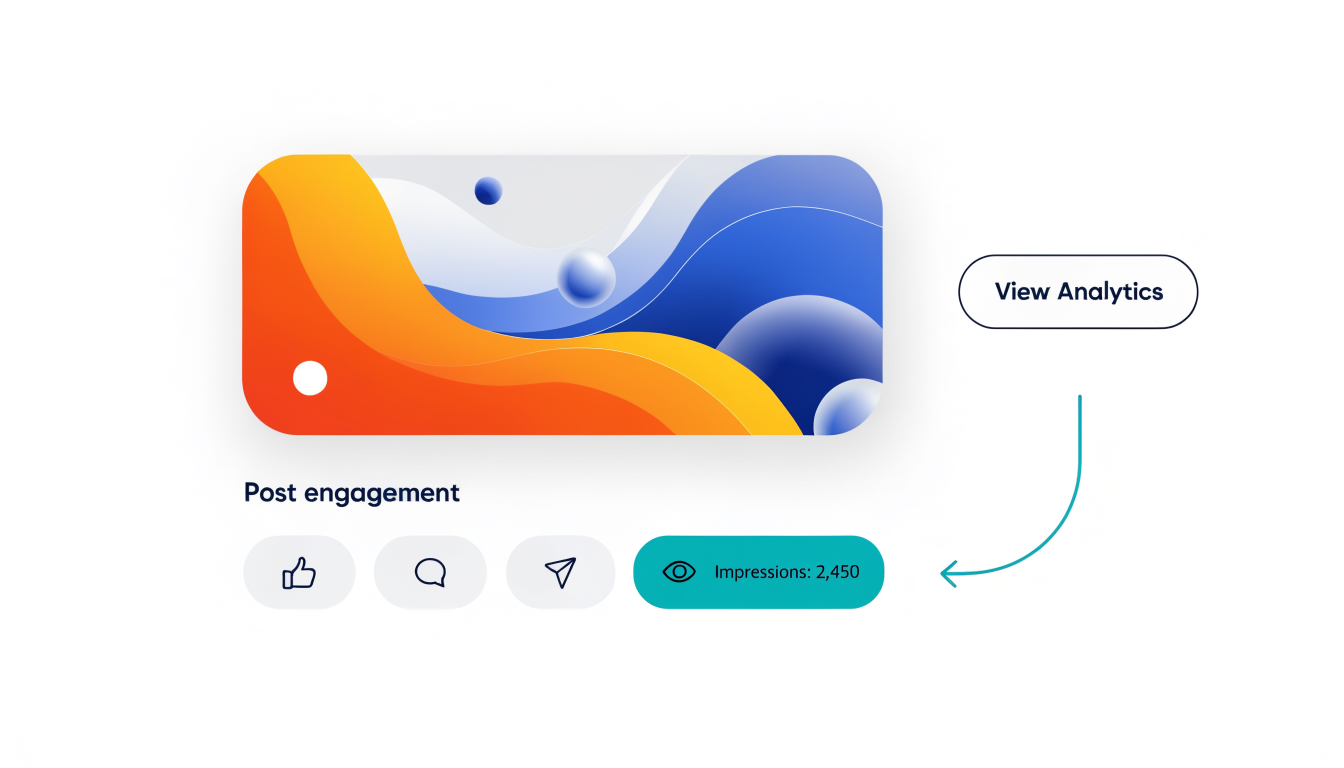
After publishing a post, you'll see engagement metrics displayed directly below it. Click the impressions number or select the "View analytics" button to access detailed performance data. LinkedIn's official analytics guide confirms this is the primary way to review post-level metrics. This opens a panel showing exactly how many times your content appeared in feeds, along with engagement breakdowns like comments, shares, and clicks.
For Company Pages
Navigate to your company page's top menu and click the "Analytics" tab. Unlike personal profiles, this gives you a centralized dashboard showing all impressions across your page's content. You'll see metrics for individual posts plus aggregated data for the entire page.
Using Date Ranges for Insights
LinkedIn lets you filter impressions by timeframe. You can track performance on weekly, monthly, or yearly bases using date range filters, helping you spot seasonal patterns or measure campaign impact over specific periods.
The real value emerges when you analyze by content type. Compare impressions across videos, articles, carousels, and text posts to identify which formats resonate most with your audience. This intelligence directly shapes your content strategy, allowing you to double down on what works and refine what doesn't.
7 Proven Strategies to Increase Your LinkedIn Impressions
Increasing your LinkedIn impressions requires moving beyond hoping your content performs well. The strategies that actually work are measurable, repeatable, and rooted in how LinkedIn's algorithm distributes content.
Your content format shapes your impression potential dramatically. Multi-image posts and carousels generate significantly higher impressions because they keep users in-app longer, while text-only posts underperform by comparison. Native videos average 5.6% engagement and multi-image posts reach 6.6%, creating a clear competitive advantage over static text. This doesn't mean abandoning written content entirely; it means strategically mixing formats to maximize reach.
Timing matters more than most people realize. Peak posting windows remain Tuesday through Thursday mornings between 9 and 11am, when your target audience is checking LinkedIn before diving into their workday. But timing interacts with frequency. Weekly posting drives substantially higher growth than monthly posting, so consistency compounds your reach over time.
Early engagement signals quality to LinkedIn's algorithm, which then shows your post to progressively larger audiences. Ask specific questions or create conversation hooks that encourage comments within the first hour of posting. This early traction tells the algorithm your content resonates, triggering broader distribution.
Profile optimization and strategic hashtags improve discoverability. A complete profile with relevant keywords helps LinkedIn surface your content to interested audiences. Use 3 to 5 targeted hashtags rather than stuffing 20 generic ones; relevance beats volume.
Finally, native video content deserves its own emphasis. LinkedIn prioritizes video that keeps users watching on-platform rather than clicking away. Short, punchy videos addressing specific professional challenges consistently outperform other formats in impression growth.
These strategies work because they align with LinkedIn's core incentive: keeping users engaged on the platform. When you create content that does that, the algorithm rewards you with impressions.
Common Questions About LinkedIn Impressions
Are impressions the most important metric?
Not really. Impressions don't guarantee commercial success; the most important metric is the number of leads generated. Think of impressions as visibility, not validation. A post with 10,000 impressions but zero clicks is essentially invisible where it matters. Focus on engagement rates, click-throughs, and conversions instead.
How many impressions is considered good?
Achieving impressions equal to 2-3 times your follower count is considered solid performance. Someone with 5,000 followers aiming for 10,000 to 15,000 impressions per post is tracking well. That said, quality always beats quantity. A niche audience that engages deeply outperforms a passive, massive one.
Why are my impressions declining?
If impressions decline, it could mean engagement has dropped and LinkedIn's algorithm deprioritized your posts. The algorithm rewards content that sparks meaningful interaction early on. If your recent posts aren't generating comments or shares quickly, LinkedIn shows them to fewer people. The solution: post content that invites genuine conversation, not just passive scrolling.
Can I increase impressions without spending money?
Yes. Consistency matters most. Post regularly, use relevant keywords, tag people thoughtfully, and engage with others' content first. Building genuine relationships creates a network that amplifies your reach naturally.
Do impressions count my own views?
Your own views are counted towards the analytics of your content. So technically, yes. Don't obsess over this though; it's a minor factor in your overall numbers.
What's the difference between impressions and reach?
Reach is the total number of unique people who see your content. Impressions count every single view, including repeats from the same person. Reach is typically lower but more meaningful for understanding audience size.
Beyond Impressions: Converting Visibility Into Real Business Results
You've tracked your impressions, optimized your content, and watched the numbers climb. But here's the uncomfortable truth: visibility without impact is just noise. Understanding impressions is important, but the most important metric is whether your content is building authority or just passing through the feed unnoticed. The real question isn't how many people saw your post; it's what they did after seeing it.
This is where the conversion journey begins. Impressions represent the top of your funnel, the widest point where potential connections first encounter your message. But a high impression count paired with low engagement rates signals a critical problem: your content isn't resonating. You're reaching people, yet failing to move them toward action.
The most useful insights come when impressions are combined with other metrics like click-through rates and dwell time. Together, these metrics reveal the full story: which content educates, which builds trust, and which actually converts. Track engagement rates, monitor profile visits that follow your posts, measure lead generation, and ultimately, connect posts to pipeline activity.
This is where strategy shifts from vanity metrics to genuine growth. Modern tools can help you optimize impressions while simultaneously strengthening engagement and conversion potential. The goal isn't just to be seen; it's to be remembered, trusted, and chosen. Your next step is turning those impressions into meaningful business results through smarter content and intentional measurement.