LinkedIn B2B Influencer Marketing: A 2026 Overview & Strategy Guide
Wilmer KarlssonTarstad
Last Updated: February 19, 2026
Key Takeaways
- 85% of B2B marketers now run influencer programs with average 520% ROI, making it core strategy
- LinkedIn dominates B2B influencer marketing with 80% of social leads and 3x higher engagement
- Always-on partnerships with relevant industry experts outperform one-off campaigns significantly
- AI-powered tools now help 57% of marketers create content and identify ideal influencers efficiently
- Authentic thought leadership and trust trump follower count in professional B2B environments
What Is LinkedIn B2B Influencer Marketing in 2026?
LinkedIn B2B influencer marketing is no longer an experiment. It's the strategic practice of partnering with industry experts and thought leaders on LinkedIn to build credibility, reach decision-makers, and drive measurable business results. Think of it as authentic advocacy from practitioners who already have your target audience's attention and trust.
The shift has been dramatic. Just six years ago, only 34% of B2B marketers ran influencer programs. Today, 85% do. That's not gradual adoption; that's mainstream acceptance.
Why the urgency in 2026? Three converging forces: first, traditional marketing has a trust problem. Audiences are skeptical of brand messaging, but they listen to peers. Second, AI-generated content has saturated the feed, making authentic human voices more valuable than ever. Third, 80% of B2B social leads originate from LinkedIn, not Facebook, Twitter, or TikTok. Your decision-makers live here.
The ROI speaks for itself: B2B influencer marketing programs deliver an average 520% return. That's not marginal improvement; that's transformational. For growth-focused teams, this has moved from optional to essential.
Why LinkedIn Dominates B2B Influencer Marketing
LinkedIn isn't just another social platform for B2B marketing; it's the only one engineered specifically for professional decision-making. That distinction matters enormously when you're building an influencer strategy.
The numbers tell the story. Four out of five LinkedIn members drive business decisions within their organizations, and the platform hosts roughly 61 million senior-level professionals. This concentration of actual buyers and decision-makers is unmatched anywhere else. You're not broadcasting to a general audience; you're speaking directly to people with budget authority and purchasing power.
The conversion advantage reinforces this. LinkedIn generates 277% more leads than Facebook and Twitter combined, with conversion rates hitting 2.74% compared to other platforms' fractions of a percent. When B2B companies run campaigns across multiple channels, LinkedIn consistently outperforms.
What makes this possible is LinkedIn's algorithm design. Unlike platforms obsessed with viral reach, LinkedIn's algorithm rewards engagement and dwell time, favoring quality interactions over vanity metrics. A thoughtful article that keeps someone reading for three minutes beats a flashy post viewed for two seconds. This fundamentally changes how influencer content performs.
Perhaps most critically, practitioners trust practitioners more than brands in B2B. When a respected industry peer shares insights, validates a solution, or recommends an approach, that carries weight corporate messaging simply can't replicate. Influencer credibility compounds on a platform built on professional reputation.
Content also lives longer on LinkedIn. Posts continue generating engagement days or weeks after publication, creating sustained visibility that Instagram and Twitter can't match. This longevity amplifies your influencer investment over time.
Always-On vs Campaign-Based: The Strategy That Actually Works
The difference between always-on and campaign-based influencer marketing isn't subtle. It's the difference between building and burning.
Always-on influencer programs are exactly what they sound like: sustained, relationship-focused partnerships integrated into your marketing infrastructure year-round. Campaign-based approaches, by contrast, treat influencers as tactical assets for specific launches, then move on.
The data is stark. 99% of B2B marketers using always-on approaches rate their programs as effective, while teams relying solely on one-off activations are 17x more likely to report ineffective results. It's not even close. In fact, 82% of top-performing teams use always-on programs rather than sporadic campaigns.
Here's why the gap exists: long-term partnerships create authenticity that one-off deals simply can't replicate. When you work with an industry expert consistently, both brands grow in tandem. The influencer understands your positioning, your audience, your goals. Their recommendations carry real weight because they're rooted in genuine familiarity, not a transactional arrangement.
There's also an algorithmic advantage. LinkedIn rewards consistent engagement signals. When an influencer regularly shares and amplifies your content, their audience sees a pattern. Over time, that consistency boosts visibility in ways sporadic posts never will.
Budget allocation reflects this reality too. Teams with always-on programs are more likely to secure dedicated, growing budgets because the ROI compounds. You're not starting from zero with each campaign; you're building on established credibility and proven results.
The strategic choice is clear: invest in relationships, not transactions.
The ROI Reality: What B2B Influencer Marketing Actually Delivers
The numbers tell a compelling story. B2B influencer marketing delivers 520% average ROI, translating to $5.78 to $6.50 in revenue for every dollar invested. That's not theoretical; it's 11x higher ROI than regular digital ads, making traditional paid campaigns look increasingly inefficient.
But here's what separates serious strategists from casual experimenters: understanding why this works. Leads sourced through trusted influencer endorsements convert at significantly higher rates because they arrive pre-qualified. Your prospect already sees the solution through an expert lens, not a sales pitch. This quality difference directly impacts your pipeline velocity and customer acquisition cost.
Real outcomes prove it. SAP collaborated with 11 influencers reaching 80 million people with 1.5 million engagements, generating measurable pipeline impact. Vynta AI achieved 40% higher lead qualification rates through influencer partnerships, demonstrating that authentic endorsements filter better than broad awareness campaigns.
The measurement game has evolved dramatically. Seventy percent of brands now track ROI beyond vanity metrics, focusing instead on pipeline influence, deal influence, and revenue attribution. This shift matters because it forces accountability and reveals which influencers actually move your business forward.
Technology is accelerating results further. 57% of marketers using AI for influencer content creation are scaling personalization and outreach while maintaining authenticity. AI handles repetitive tasks, freeing teams to focus on relationship building and strategic partnerships.
The ROI reality is this: B2B influencer marketing isn't a gamble anymore. It's a quantifiable channel with proven returns that outpace traditional alternatives by orders of magnitude.
Building Your LinkedIn B2B Influencer Marketing Strategy
Building a LinkedIn B2B influencer strategy requires a structured approach that moves beyond vanity metrics. Here's your roadmap.
Start with Clear Objectives
Define what success looks like for your business. Are you building brand awareness, generating qualified leads, or positioning your company as an industry authority? Your goal shapes everything that follows, from influencer selection to how you measure results.
Understand Your Audience Inside Out
Map your ideal customer's profile: their role, industry, pain points, and decision-making authority. Where do they spend time on LinkedIn? What content resonates with them? This clarity ensures you partner with influencers whose audiences actually align with your prospects.
Find the Right Influencer Mix
LinkedIn success doesn't require celebrity endorsements. Consider four influencer types: industry titans (CEOs and founders with massive reach), thought leaders (respected voices in specific domains), content creators (skilled storytellers), and niche specialists (deep expertise in micro-verticals). LinkedIn rewards quality and relevance over follower count, meaning a 15,000-follower specialist often outperforms a 500,000-follower generalist.
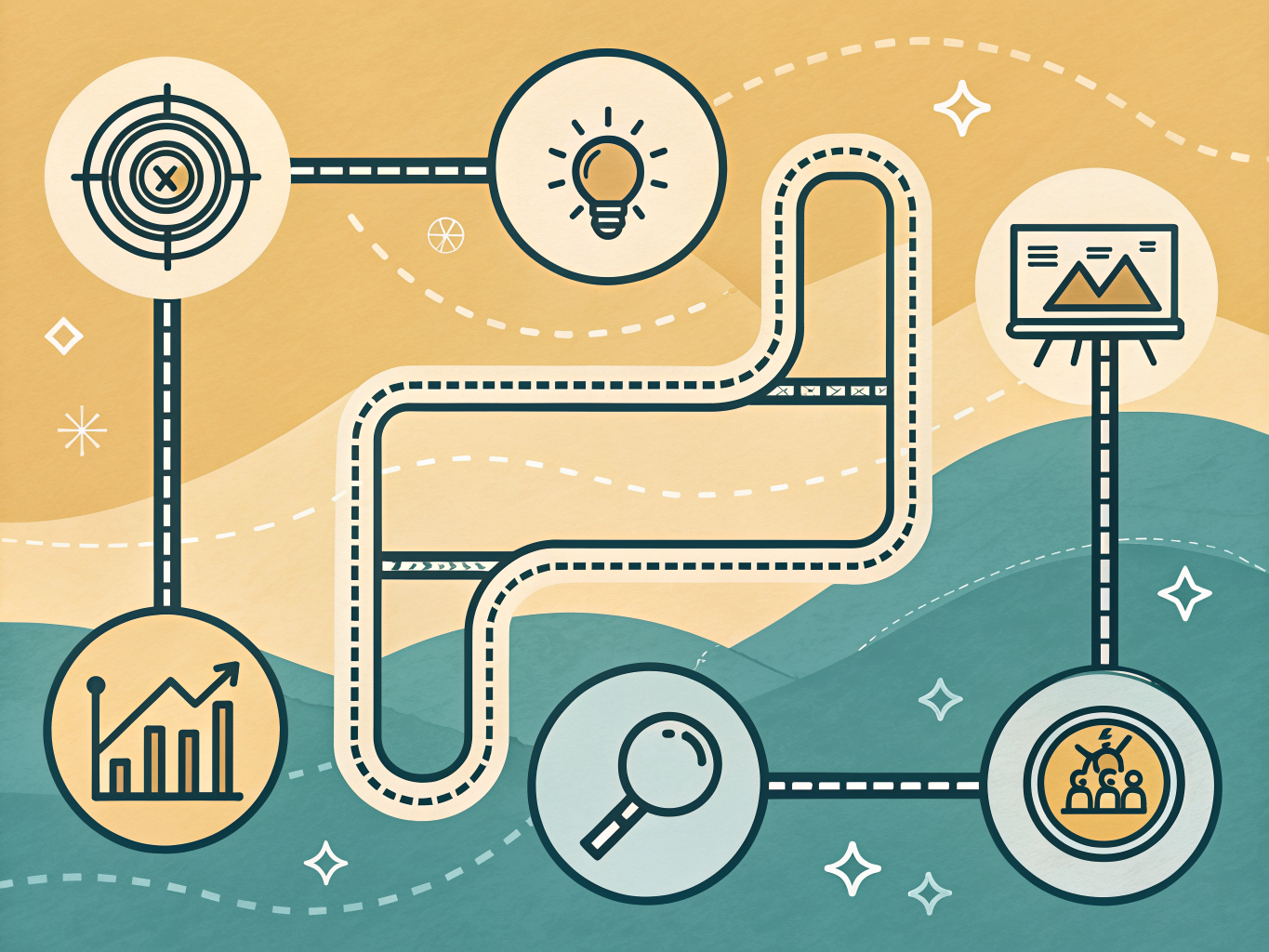
Build Authentic Partnerships
Engagement precedes asks. Comment meaningfully on potential partners' content, share their insights, and demonstrate genuine interest before proposing collaboration. Influencers recognize authentic advocates. When you do pitch, lead with value: exclusive insights, co-created content opportunities, or meaningful revenue sharing.
Prioritize Quality Content
One well-crafted post from a relevant influencer beats ten mediocre ones. Focus on content that generates dwell time and genuine engagement, not just likes. Educational content, case studies, and honest perspectives consistently outperform promotional messaging.
Measure What Matters
Track pipeline impact, lead quality, and revenue influence. Monitor which influencer partnerships drive actual customers, not just impressions. Intent data usage leads marketers to see up to 62% increase in revenue growth, so layer influencer campaigns with account-based insights for maximum impact.
This framework transforms influencer marketing from experimental tactic to core revenue driver.
Common Challenges and How to Overcome Them
Let's be honest: implementing LinkedIn B2B influencer marketing comes with real friction points. 48% of marketers cite finding the right influencers as their primary pain point, and that's just the beginning.
The discovery problem has a straightforward fix. Stop obsessing over follower counts. Instead, prioritize audience alignment by examining who engages with an influencer's content and whether those people match your ideal customer profile. Platforms with robust LinkedIn coverage and filtering capabilities help you move faster here.
Then there's measurement. 46% struggle with reporting results, which happens because they're tracking the wrong metrics. Engagement numbers feel good but don't drive revenue. Shift your focus to marketing-qualified leads (MQLs), sales-qualified leads (SQLs), and pipeline influence. Connect influencer activities to actual business outcomes.
Content creation slows many programs down, though this is changing rapidly. 57% of B2B marketers now use AI tools to improve content creation efficiency, reducing bottlenecks between your team and influencers.
Budget allocation causes hesitation too. Start focused rather than scattered: allocate $15,000 to $30,000 toward one channel or influencer tier, prove ROI, then scale confidently. This approach builds internal buy-in faster than spreading resources thin across multiple experiments.
Finally, treat influencers as extensions of your thought leadership strategy, not isolated tactics. Integration with your broader content calendar and sales enablement efforts multiplies impact and justifies continued investment.
FAQ: Your LinkedIn B2B Influencer Marketing Questions Answered
Q: How much should we budget for LinkedIn influencer marketing?
Start with $15k-$30k monthly for one channel. This covers influencer fees, content production, and management. Scale after you've proven ROI with your first cohort of partners.
Q: How long before we see pipeline impact?
Always-on programs typically need 3-6 months to show measurable results. B2B sales cycles are longer, so patience matters. Track early signals like engaged prospects and qualified conversations before waiting for closed deals.
Q: Does follower count matter when selecting influencers?
Not as much as you'd think. Relevance trumps vanity metrics every time. A 15k-follower industry expert in your space will outperform a 500k generalist. Look for authentic engagement rates and audience alignment with your buyer persona.
Q: Which content formats perform best?
LinkedIn video posts get 3x more reach than other formats for B2B. Authentic thought leadership consistently outperforms overtly promotional content. Mix educational posts, behind-the-scenes insights, and genuine industry commentary.
Q: How do we measure actual ROI?
Track pipeline influence, lead quality, and revenue impact instead of vanity metrics like likes. Use UTM parameters, CRM attribution, and pipeline tagging to connect influencer activity to deals. This matters more than engagement rates.
Q: Can we run influencer campaigns alongside paid ads?
Absolutely. Multi-channel campaigns deliver 31% uplift in leads compared to single-channel approaches. Combine organic influencer content with paid amplification for maximum reach and credibility.
Key Takeaways: Your Action Plan for 2026
LinkedIn B2B influencer marketing isn't a nice-to-have anymore; it's your competitive advantage in 2026. Here's how to move from planning to results.
Your 30-Day Sprint
Week 1 starts with an honest audit. Review your LinkedIn profile for consistency, check your current follower quality, and identify 5-10 influencers genuinely relevant to your industry. Don't chase follower counts; target voices your buyers actually listen to.
Weeks 2-4 flip the script from passive to active. Start commenting meaningfully on their content, share their insights with your network, and build real relationships before asking for anything. This groundwork matters more than you'd think.
Your 90-Day Blueprint
Month 2 is collaboration time. Propose your first partnership, whether that's co-created content, a LinkedIn article, or a webinar. Start small and prove the value together.
By Month 3, shift to an always-on program. 99% of teams with always-on programs rate them effective, and for good reason. Establish your measurement framework now, tracking pipeline impact and engagement metrics that matter to your business.
The Ongoing Play
Use AI tools to optimize your content strategy and refine your influencer mix based on performance data. Tools like GetViews.AI help you track engagement patterns and identify which relationships drive real pipeline movement.
Remember this: authentic relationships and genuine value creation always outperform promotional tactics. Quality beats quantity every single time.
Conclusion: LinkedIn Influencer Marketing Is Your Competitive Advantage in 2026
LinkedIn B2B influencer marketing isn't a future trend anymore. It's happening now, and 85% of B2B marketers are already running programs. If your team isn't among them, you're not just behind; you're losing ground to competitors who are capturing 80% of social-generated leads.
The numbers speak for themselves: 520% ROI, 99% effectiveness for always-on programs, and measurable business impact at every stage of the buyer journey. This isn't experimental territory. This is essential infrastructure for B2B growth in 2026.
What separates winners from the rest? Authentic relationships, consistent engagement, and patience. You won't see results overnight, but start relationship building today, measure at 90 days, then scale what works. Modern tools now make identifying the right influencers, creating aligned content, and tracking performance straightforward.
The competitive window is closing. Your buyers are on LinkedIn. Your competitors' influencers are already reaching them. Start building your program this week. Focus on one or two strategic partnerships first, establish your process, then expand. The question isn't whether to do this anymore. It's how quickly you can execute.