LinkedIn Cold Messaging: Complete Guide for B2B Outreach
What is LinkedIn Cold Messaging and Why It Works LinkedIn cold messaging is straightforward: reaching out to professionals who don't know you yet to start a bus...
Wilmer KarlssonTarstad
What is LinkedIn Cold Messaging and Why It Works
LinkedIn cold messaging is straightforward: reaching out to professionals who don't know you yet to start a business conversation. It comes in three forms: connection requests paired with a message, direct messages to existing connections, and InMail to non-connections. Simple enough. But here's what separates it from traditional cold email.
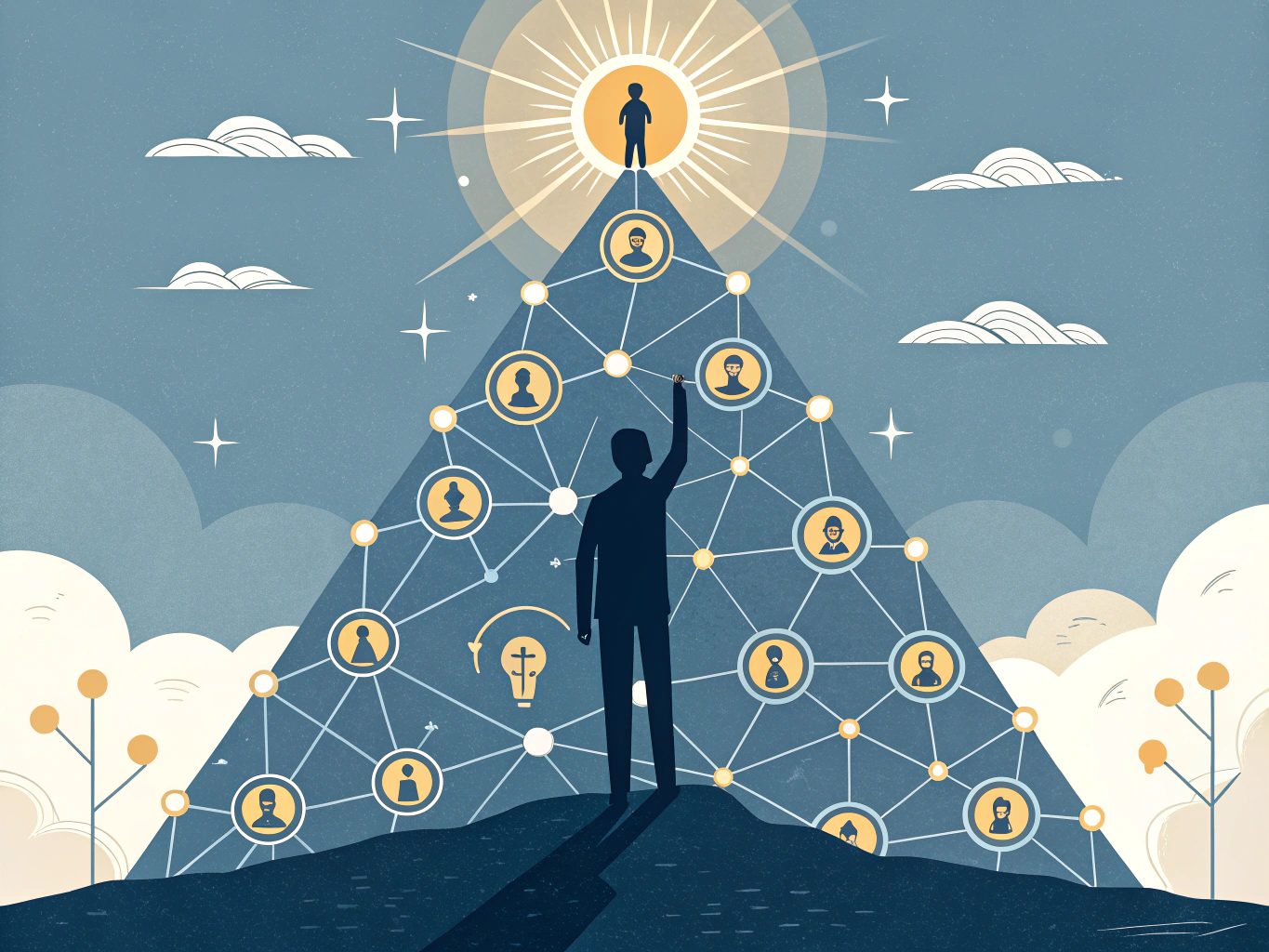
The numbers tell the real story. LinkedIn cold messaging achieves 10-15% response rates, which is 2-3x higher than cold email. That gap exists because LinkedIn isn't email. It's where decision-makers live. 80% of B2B decision-makers are active on LinkedIn, and they're checking it regularly. Your message arrives in a space where they're already thinking about business.
What email can't do, LinkedIn does automatically: it shows your profile, your connections, your credibility. Prospects see your face, your work history, mutual connections. That social proof changes everything. InMail messages achieve 18-25% response rates compared to 3% for standard cold emails, because you're not a stranger in an inbox. You're a professional they can actually verify.
Most people still treat LinkedIn like email. They copy templates, blast generic messages, and wonder why nothing works. The opportunity here is massive because the bar is low. Do it right, and you'll stand out immediately.
How to Craft LinkedIn Cold Messages That Actually Get Replies
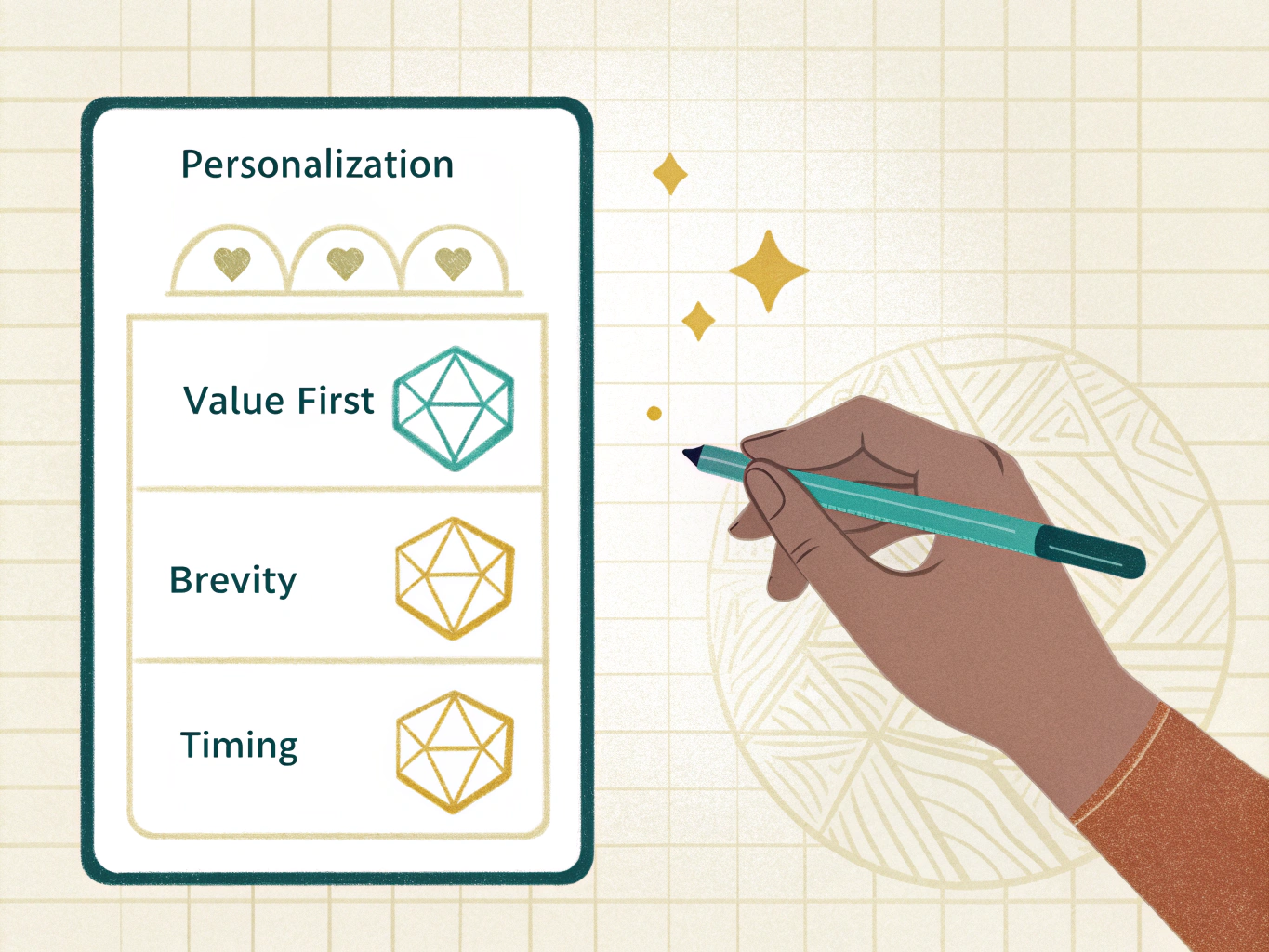
Here's the key insight most people miss: generic messages die in inboxes. Personalized messages achieve a 9.36% reply rate compared to 5.44% without personalization, which means adding real context to your outreach nearly doubles your chances of getting a response.
Start with research. Spend 90 seconds on their profile before writing anything. Look for recent activity, job changes, company news, or mutual connections. Then reference something specific in your first line. Instead of "I think we could work together," try "I saw you just published that article on supply chain automation; we've helped similar companies reduce costs by 23%." That specificity signals you're not blasting 500 identical messages.
Keep it short. The ideal LinkedIn cold message runs 50-75 words, maximum 100 words. People skim on mobile. Long paragraphs get skipped. Your message should feel like a quick conversation starter, not a sales pitch. One idea per message works best.
Structure matters too. Lead with value or curiosity, never with what you want. Show why you're reaching out, demonstrate you understand their world, then ask a genuine question or suggest a tiny next step. Avoid "Let's grab coffee" or "Would love to connect." Instead: "Given your focus on [specific pain point], I think you'd find X interesting. Worth a quick chat?"
The first line determines 70% of response probability, so nail it. Your opening sentence should make them curious enough to read the rest.
Timing counts. Tuesday and Monday see the highest reply rates at 6.90% and 6.85% respectively. Send between 7-8 AM or 6-7 PM when people check LinkedIn purposefully, not during work chaos.
LinkedIn Cold Messaging Strategy: Personalization and Follow-Ups
Most people send a single message and call it a day. That's why they fail.
The real power of LinkedIn cold messaging lives in the follow-up sequence. Research shows that follow-up messages account for 50-70% of total responses in outreach campaigns, yet the majority of professionals never send a second message. This isn't laziness on your part; it's psychology on theirs. Prospects are busy, skeptical, and buried in notifications. Your first message rarely lands at the right moment.
Here's the systematic approach that works:
Research deeply before you message. Spend 3-5 minutes on each prospect's profile. Check their recent posts, company announcements, job changes, and engagement patterns. This isn't busy work; it's ammunition. Reference something specific in your opening line: a recent promotion, a company milestone, a post they liked. This separates you from the 95% sending generic templates.
Build message variations into your sequence. Use at least three different message angles for each campaign step. This prevents the robotic feel of copy-paste outreach while testing what resonates. Vary your hook: lead with value on message one, social proof on message two, urgency on message three.
Extend beyond LinkedIn. Omnichannel campaigns combining LinkedIn, email, and phone yield 40% higher engagement compared to single-channel approaches. If you have their email, use it. A well-timed email after a LinkedIn message works because you're reaching them in a different context.
Warm your network first. Before pitching, spend two weeks engaging with target accounts' content. Like posts, leave thoughtful comments, share their content. When your message arrives, you're not a stranger; you're someone who's already shown genuine interest.
The result? Highly personalized sequences can push response rates past 25%. That's not luck. That's system.
Understanding LinkedIn Messaging Limits and Premium Features
LinkedIn's messaging limits exist for a reason: they keep the platform from becoming a spam cesspool. Understanding them isn't about restriction; it's about working smarter.
Here's the straightforward breakdown:
Free accounts get 100 messages per week and 100-200 connection requests weekly. Connection acceptance rates below 30% trigger LinkedIn's spam detection algorithm, so quality matters more than volume. Paid accounts bump to 150 messages per week with similar connection request allowances. The real unlock? Messages to existing connections have no strict daily limit, which means your network depth matters far more than your outreach budget.
InMail deserves special attention. Free accounts get zero; Sales Navigator users receive 50 monthly. InMail achieves 18-25% response rates compared to 3% for cold emails, making it worth the investment if your budget allows. You get 2,000 characters plus a 200-character subject line per message.
The real strategy? Stop viewing limits as walls. They're guardrails ensuring your outreach stays professional. A tight daily quota forces you to be selective about targets, which naturally improves your conversion rates. Work within these boundaries consistently, maintain strong acceptance rates, and you'll build genuine momentum without triggering any account restrictions.
LinkedIn Cold Messaging Templates and Real Examples
Here are four templates that actually convert. Each one follows a proven pattern: specificity, brevity, and a clear reason to respond.
Template 1: Value-First Connection Request
"Hi [Name], saw your recent post on [specific topic]. Your take on [detail] aligned with what we're seeing with [relevant stat/observation]. Thought it'd be worth connecting. Cheers."
Why it works: Personalized connection requests achieve 9-10% reply rates vs 5-6% generic. You're showing you actually read their content, not mass-connecting.
Template 2: Curiosity-Driven First Message
"[Name], quick question: when you're evaluating [their industry challenge], what's the biggest blocker you usually hit? Trying to understand this better."
Why it works: You're asking for their expertise, not pitching. People respond to genuine curiosity. Keep it under 50 words.
Template 3: The Insight Share
"Noticed [Company] recently [specific business move]. We helped a similar company in [industry] handle the same transition. Might be worth a 15-min call to compare notes?"
Why it works: Messages offering insights outperform generic pitches by 2x. You're positioning yourself as informed, not desperate.
Template 4: Smart Follow-Up
"Last message got buried, I'm sure. One thing I should've mentioned: [new specific detail relevant to them]. Worth a quick conversation?"
Why it works: Acknowledges the silence without being awkward. Adds new information so it's not just nagging.
The Golden Rule: Every template has a question or specific ask. No exceptions. Messages without friction (something to respond to) get ignored. Test variations of these across your outreach to see what resonates with your specific audience. Track which openings get responses, then double down.
Common LinkedIn Cold Messaging Mistakes to Avoid
Here's the thing: most LinkedIn cold messages fail before they're even opened.
The biggest culprit? The pitch slap. You connect, wait 24 hours, then immediately ask for a meeting or demo. 87% of cold messages are ignored due to poor personalization, and this approach almost guarantees your message lands in the deleted folder.
Then there's the template trap. Sending identical messages to 50 prospects might feel efficient, but it reads like spam. People know when they're one of hundreds. Generic greetings and copy-paste pain points don't convert; they get ignored.
You're also probably messaging the wrong people at the wrong time. No research into their role, recent activity, or actual needs means your timing is off and your relevance is zero. And if your own profile isn't optimized, even a perfect message won't land. Profile optimization is the first rule to get the best out of your LinkedIn cold message, yet most skip this foundation entirely.
Length kills response rates too. Five-paragraph essays asking for too much commitment get archived immediately. Keep it short, specific, and ask for something small first.
Finally, your follow-up strategy matters. No follow-up wastes your initial effort; too-aggressive follow-ups annoy people. The window between persistence and pushiness is narrow.
The good news: these mistakes are fixable once you recognize them.
Scaling Your LinkedIn Cold Messaging with Tools and Automation
Here's the reality: you can't scale personalized outreach without the right infrastructure. But too many professionals treat automation as a shortcut to personalization when it should be the opposite. The data backs this up. LinkedIn automation combined with personalization boosts reply rates to 16.86%, but only when you maintain genuine human oversight.
The winning approach uses AI to handle the repetitive grunt work. Let tools generate message variations and spintax so you're not manually tweaking 500 outreach sequences. But always inject real context: specific job titles, recent company announcements, actual profile insights. AI generates the skeleton; you add the muscle.
Before scaling aggressively, warm up your account and domain. Build genuine connections with your ideal customer profile for two to three weeks. Accept requests thoughtfully. Engage on posts. This foundation prevents LinkedIn's spam filters from throttling your outreach.
Monitor your metrics obsessively. Track acceptance rates and reply rates weekly. If acceptance rates drop below 85%, slow down immediately. If reply rates dip, revisit your messaging. These numbers tell you whether you're operating efficiently or triggering red flags.
The future of LinkedIn outreach isn't choosing between automation and authenticity. It's using tools to amplify human judgment at scale. Your competitive edge comes from combining smart systems with intentional relationship-building. Tools handle volume; you handle strategy.
Stop thinking of automation as a way to send more messages. Think of it as freeing your time to send better ones, faster. That's how you turn LinkedIn cold messaging into a predictable revenue channel instead of a constant scramble.