LinkedIn Company Page vs Personal Profile: Key Differences 2026
Wilmer KarlssonTarstad
Last Updated: February 11, 2026
Key Takeaways
- Personal profiles generate 8x more engagement and 2.75x more impressions than company pages
- Company pages can only run ads, while personal profiles enable direct 1-to-1 relationship building
- Sole proprietors should prioritize personal profiles; growing teams need both strategically
- The winning strategy combines personal profiles for engagement with company pages for credibility
- Tag your company when posting personally to amplify page visibility without extra effort
What Are LinkedIn Company Pages and Personal Profiles?
At their core, these are two distinct digital spaces serving different purposes. Your personal profile is your professional identity on LinkedIn; it represents you as an individual with your experience, skills, and professional story. A company page, by contrast, represents your organization as a collective entity, separate from any single person's profile.
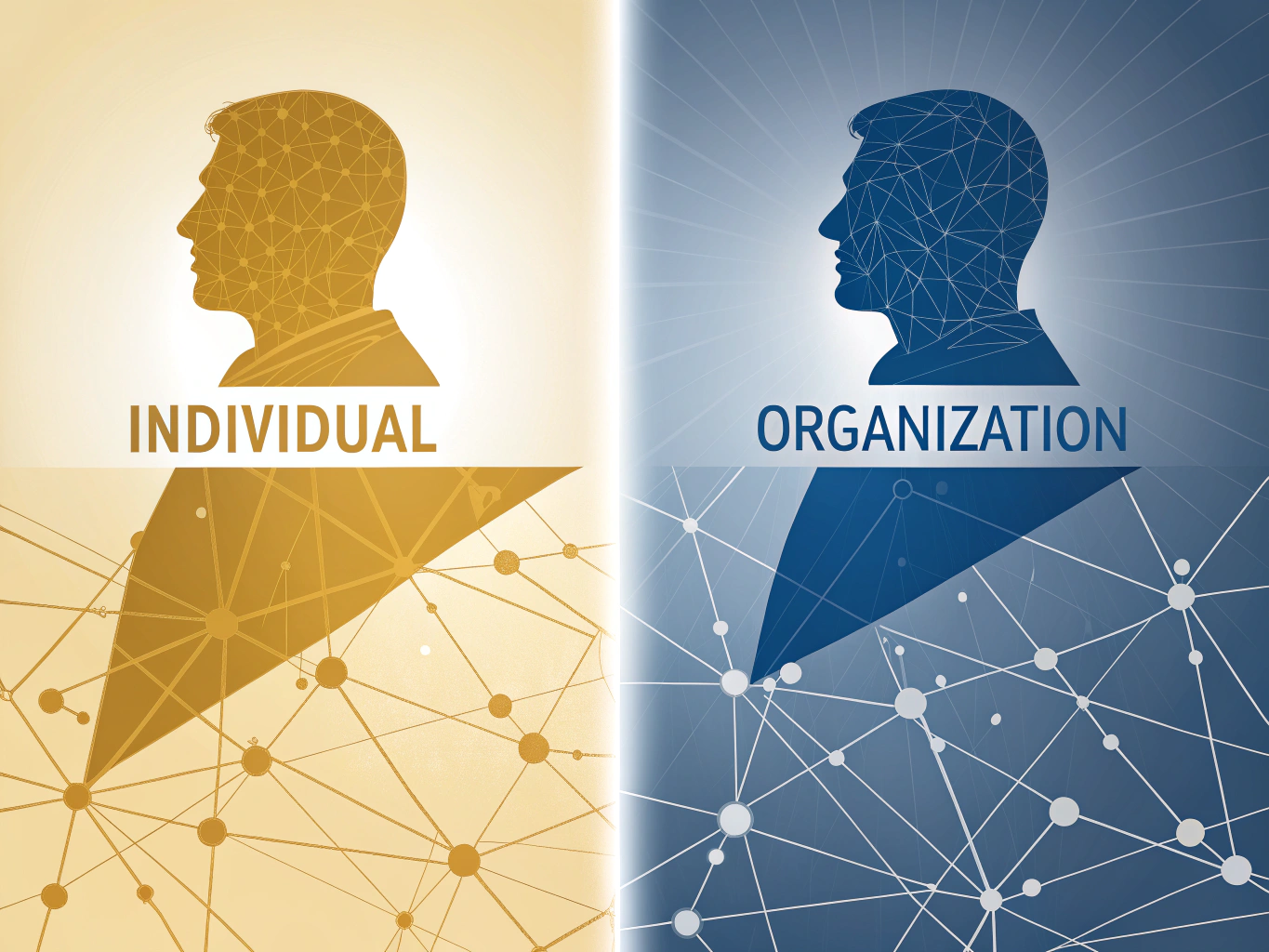
Think of your personal profile as your professional hub. It includes your headline, experience history, skills, recommendations, and activity feed. This is where you build credibility, showcase your expertise, and connect with other professionals. LinkedIn Pages represent collective organizations, while personal pages represent individuals.
Company pages operate differently. They function as your organization's branded presence, featuring company overview, mission, jobs listings, and employee directory. Rather than building connections like personal profiles do, company pages accumulate followers who want updates about your organization.
Here's the critical distinction: both are free to create, but they operate independently. Your personal profile doesn't require a company page, and vice versa. However, they work best strategically connected. Your personal profile can list your company affiliation, while your company page can feature employee profiles. For B2B professionals, understanding this separation is essential before deciding your LinkedIn strategy.
Key Structural and Functional Differences
The structural differences between these two profile types fundamentally shape how you can operate on LinkedIn.
A personal profile is active and relational. You can send direct messages to anyone, initiate connection requests, and have one-to-one conversations with prospects and colleagues. Company pages, by contrast, are passive; they accumulate followers but cannot proactively reach out or send direct messages. This distinction matters enormously for sales and business development work.
The engagement gap is substantial. Personal profiles generate 8x more engagement and 2.75x more impressions than company pages, partly because LinkedIn's algorithm favors content from individuals over organizations. When you post on your personal profile, the platform distributes your content more aggressively to your network. Company page posts reach a narrower audience by default.
There's also a functional asymmetry worth noting. You cannot proactively connect with targeted prospects from a company page or have one-to-one conversations. If someone messages your company page, responses come from whoever manages it, not from a specific person. This creates friction for relationship-building.
One exception: only company pages can run LinkedIn Ads directly from their account interface. Personal profiles require you to use LinkedIn Campaign Manager, though the functionality is essentially identical.
Here's a practical constraint: you must have an active personal profile before you can even create a company page. LinkedIn requires this as a foundational requirement. This technical requirement actually reinforces the strategic reality: your personal profile is your primary asset on the platform, and your company page plays a supporting role in your broader LinkedIn presence.
Why Personal Profiles Drive Better Results for Relationship Building
Here's the hard truth: people don't want to talk to logos. They want to talk to people.
When a prospect receives a message from your company page, it feels impersonal, corporate, and frankly, automated. Research on brand psychology shows that people enjoy talking to logos just as much as they do talking to automated message systems, and responses from logos often feel canned. Compare that to a message from you, a real human with a face, a story, and genuine intent. The difference in response rates is staggering.
This comes down to basic psychology. Trust isn't built through corporate messaging; it's built through consistent human interaction. When you share insights from your personal profile, comment thoughtfully on others' posts, or send a personalized message, you're demonstrating authenticity. Your prospect can see your background, your expertise, your network, and your values. They can evaluate whether they actually want to work with you. That's trust.
Personal profiles also unlock relationship-building tools that company pages simply can't match. Direct messaging on your personal profile creates a direct line to prospects. You can have real conversations, ask follow-up questions, and develop genuine rapport. There's no middle layer between you and your audience; it's just professional-to-professional connection.
Here's where it gets strategic: the highest ROI comes from providing social selling training to sales teams who can connect with prospects and build relationships via personal profiles. Your sales team's personal brands become your competitive advantage. Additionally, if you want to run Thought Leader Ads, you need a personal profile; company pages don't have this capability.
Personal stories also convert better. When you share a challenge you overcame, a lesson you learned, or a win your team achieved, people engage. They see themselves in your story. Company page posts about "our latest innovation" or "excited to announce" feel distant and corporate.
The takeaway: your personal profile is your most powerful business development tool on LinkedIn. Invest in it first, nurture your network through it, and watch your relationship-building results improve dramatically.
When Company Pages Actually Add Value
Here's the section:
A company page isn't just a vanity project. When executed properly, it becomes your organization's credible anchor on LinkedIn, doing heavy lifting that personal profiles simply can't match.
Official legitimacy matters. A complete company page signals to prospects and partners that you're established and serious. Pages with complete information get 30% more weekly views, which means investment in your company profile directly impacts visibility.
Advertising becomes possible. Only company pages can run LinkedIn Ads, allowing companies to target specific audiences and generate leads. If lead generation matters to your business, this alone justifies the setup.
Your data improves. Company pages provide granular analytics on who's viewing your content, which industries engage most, and how your messaging lands. This intelligence shapes better B2B strategies than guessing alone.
Search visibility expands. LinkedIn company pages are very SEO friendly and often rank high in Google search results for company names. Your prospects searching for you on Google might land on your LinkedIn page first, making it a critical discovery point.
Recruitment accelerates. A well-maintained company page showcases your culture, team members, and values to prospective hires. Employees see themselves reflected in company content, strengthening their connection to the brand.
Premium features unlock growth. Upgrading to a Premium Company Page adds visitor insights, advanced analytics, and AI-powered content assistance that help you refine your approach over time.
The key takeaway: company pages complement personal profiles. They're not competitors. Your personal profile builds relationships; your company page builds institutional credibility. Both deserve attention, but in the right sequence.
The Strategic Hybrid Approach: Using Both Effectively
The winning strategy isn't choosing between your personal profile and company page; it's using them as complementary tools. Your personal profile is where relationships happen. Your company page is where credibility lives. The combo works best when you use your profile to talk to people and your company page to show what you do.
Your playbook depends on your business stage.
If you're a solopreneur, prioritize your personal profile. Build your audience there first; it's where your network responds, engages, and trusts you. Still create a company page, but keep it basic. You'll need it eventually for advertising, linking experience, and establishing your business as a legitimate entity.
Small teams should split the workload strategically. Have your team members build personal brands by sharing insights, customer wins, and industry perspectives from their accounts. Meanwhile, actively manage your company page with curated content, company updates, and recruitment posts. This dual approach multiplies your reach without requiring each person to maintain both equally.
Large organizations need robust company pages as the public face of your brand. But don't stop there. Encourage executives and subject matter experts to build authority through personal profiles. Their networks extend your company's reach exponentially, and prospects often trust individuals more than corporate accounts.
Here's the efficiency play: when you post from your personal profile, tag your company. When you reshare as your company page, you save effort while ensuring people find content they prefer. Your top-performing personal posts become company page content without starting from scratch.
Consider Thought Leader Ads from your personal profile for scaled reach. This feature lets you amplify your voice while maintaining the authenticity that makes personal profiles work.
Employee advocacy multiplies this effect. When your team members share company content through their networks, engagement rates climb significantly. You're not just broadcasting; you're distributing through trusted relationships.
The sequence matters: start with your personal profile to establish credibility and build your network. Then layer in a company page as you scale. Together, they create a presence that's both human and authoritative, which is exactly what B2B buyers want to see.
LinkedIn Premium Features and Advanced Options
LinkedIn Premium features exist for both personal profiles and company pages, but they serve different purposes and deliver different returns depending on your business stage.
For company pages, LinkedIn Premium Company Page pricing starts at $76.99 per month billed annually. You gain access to visitor insights revealing who's viewing your page, auto-invite capabilities to build followers faster, and AI-powered content assistance that saves time and ensures consistent professional posts. Dynamic cover images and rotating banners let you showcase products, campaigns, or seasonal initiatives. The Premium badge also signals upgraded status in search results, which matters when B2B buyers are evaluating your credibility.
However, here's the honest take: for most small businesses, the Premium Company Page price tag may not be worth the cost based on features offered. If you're generating fewer than 100 qualified leads monthly or still building your audience, the ROI is questionable. Premium makes sense when you're actively scaling and need visitor data to refine targeting.
Personal LinkedIn Premium is a different calculation. InMail messaging and advanced search filters help you reach decision-makers directly, making it valuable for sales professionals and recruiters. You'll find more qualified prospects faster.
The strategic approach: start with a solid personal profile and optimize your company page's free version first. Nail your messaging, post consistently, and build organic engagement. Once you're generating meaningful traction and have clear growth targets, invest in Premium features. This sequencing prevents wasting budget on premium tools before you've maximized the foundation. Think of Premium as an accelerator for existing momentum, not a solution for weak fundamentals.
FAQ: Common Questions About LinkedIn Profiles and Company Pages
Q: Should I focus only on my personal profile or build a company page too?
Both. Start with your personal profile, but don't skip the company page. Your profile builds trust and establishes you as a thought leader; your company page gives your business credibility and reach. They work together, not against each other.
Q: Can I run ads from my personal profile?
No. Only company pages can run LinkedIn Ads, not personal profiles. If paid advertising is part of your strategy, you need a company page set up.
Q: I'm a solo founder. Do I really need both?
Yes. Even solo entrepreneurs benefit from a company page because it separates your personal brand from your business identity. Clients and partners often search for your company directly, and a professional page signals legitimacy. Plus, it keeps your personal feed from becoming purely promotional.
Q: How often should I post on each?
Post on your personal profile 2 to 4 times weekly; aim for company page updates once or twice weekly. Your personal profile is where relationships happen, so prioritize it. The company page reinforces your business presence without overwhelming your network.
Q: Can my team help grow the company page?
Absolutely. In fact, encourage it. When employees share company page content on their personal profiles, you reach their networks too. This amplifies your visibility far beyond what the company page alone achieves. Just ensure brand consistency in messaging.
Q: Is LinkedIn Premium worth it?
For B2B professionals, yes. Premium unlocks advanced search filters, InMail capabilities, and detailed analytics that help you identify and connect with the right prospects. If your business depends on lead generation or relationship building, the investment pays for itself.
Key Takeaways: Your LinkedIn Strategy Moving Forward
Here's the reality: personal profiles and company pages serve fundamentally different purposes, and you need both working in tandem.
Start here, regardless of your business stage:
-
Lead with your personal profile. Personal profiles generate 8x more engagement and 2.75x more impressions than company pages. This is where relationship building happens; this is where decision-makers actually pay attention.
-
Optimize your profile first. Before launching a company page, invest time in profile optimization. A polished personal presence builds credibility that extends to everything else you do on LinkedIn.
-
Tag your company strategically. When you post from your personal profile, tag your company to amplify reach and drive traffic to your company page without relying solely on company-posted content.
Add a company page when:
You're ready to run paid ads, track detailed analytics, recruit team members, or establish SEO presence. Most businesses start with personal profiles and naturally shift focus toward company pages as they grow.
The multiplier effect:
Encourage your team to share company content from their personal profiles. Employee advocacy consistently outperforms company page posts because it leverages personal networks and trust.
Your next move:
Assess where you are. Solo founder? Double down on personal profile engagement. Growing team? Launch that company page and create a content calendar. Established business? Implement a hybrid strategy where personal profiles drive relationships while your company page handles recruitment, ads, and analytics.
The best LinkedIn strategy isn't either/or. It's both, strategically sequenced.
Conclusion: Both Matter, But Personal Comes First
The LinkedIn company page versus personal profile debate doesn't require choosing sides. Both serve distinct purposes, and the most successful B2B professionals leverage them strategically together.
Your personal profile is the engine. It's where relationships form, conversations happen, and trust builds. People do business with people, not logos. This is your foundation, and it deserves your attention first. Whether you're a solopreneur or C-suite executive, your personal presence on LinkedIn drives visibility and credibility in ways a company page simply cannot.

Your company page complements this foundation. It provides institutional credibility, houses company announcements, and unlocks advertising capabilities your personal profile cannot offer. Together, they amplify your reach exponentially.
The hybrid approach works because it addresses different audience needs. Your personal profile attracts prospects and builds genuine connections. Your company page establishes organizational authority and supports recruitment and brand awareness efforts.
Start by optimizing your personal profile today. Add a professional photo, craft a compelling headline, and share valuable content. Once that's solid, build out your company page. Then watch how consistent optimization across both profiles compounds your results over time, generating more leads and stronger professional relationships.