personal brand linkedin: Craft a standout LinkedIn profile
Transform your LinkedIn profile into a powerful personal brand linkedin with practical steps for content, networking, and authority.
Wilmer KarlssonTarstad
For B2B professionals, a strong personal brand on LinkedIn has gone from a "nice-to-have" to a core career asset. It's what turns your profile from a dusty online resume into a powerful engine for attracting high-value opportunities, cementing your authority, and building a network that works for you around the clock.
Why Your Personal Brand on LinkedIn Matters Right Now
Let's get one thing straight: LinkedIn is not just a place to dump your job history and wait. In today's business world, your personal brand is your reputation. It’s what people think and say about your expertise when you’re not in the room. A thoughtfully built brand doesn't just wait for luck—it actively pulls in the right opportunities. You become the person ideal clients seek out, recruiters message first, and conference organizers want on their stage.
Making the switch from a passive profile to an active, living brand is a deliberate, strategic choice. It's the difference between waiting for your next move and creating it. To really get what this means, let's look at the old way of thinking versus the new approach.
From Passive Profile to Active Brand
| Outdated Tactic (Passive Profile) | Modern Strategy (Active Brand) |
|---|---|
| Profile is a static, online resume. | Profile is a dynamic resource hub for your niche. |
| Waits for recruiters or connections to reach out. | Proactively shares insights to attract opportunities. |
| Posts sporadically or only reshares company news. | Follows a consistent content plan focused on value. |
| Connects with anyone and everyone. | Builds a curated network of relevant peers & prospects. |
| Focuses on "what I've done." | Focuses on "how I can help you." |
This table isn't just a list of tactics; it represents a fundamental mindset shift. Moving from the left column to the right is how you go from being just another name on LinkedIn to becoming a recognized voice in your industry.
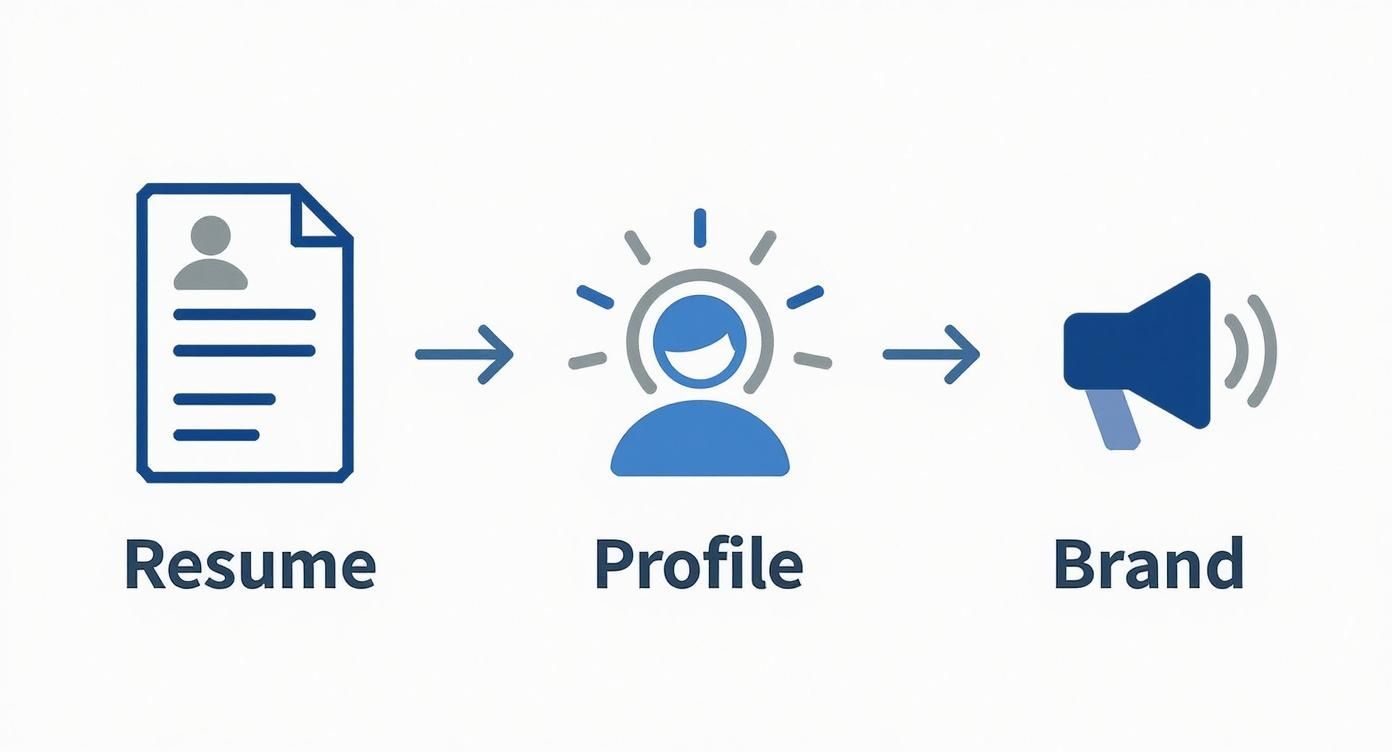
The infographic below perfectly illustrates this journey—from a simple resume to a powerful broadcasting platform that communicates your unique value.
Turning Visibility into Real-World Opportunities
Building a brand is about more than racking up views and likes; it’s about attracting the right kind of attention. When you consistently show up with valuable insights, you build something far more important: trust and credibility. Before long, you become the go-to expert people think of when they have a problem you can solve.
Think about what this looks like in practice:
- Inbound Client Leads: A marketing director reads your post breaking down a common industry challenge and DMs you for a consultation because you clearly get it.
- Unexpected Speaking Gigs: An event organizer searching for experts on your topic stumbles upon your engaging content and invites you to speak on a panel.
- High-Value Partnerships: A founder in a complementary field sees your authority and proposes a collaboration that opens up an entirely new audience for both of you.
These aren't just lucky breaks. They are the direct result of putting in the work to build an intentional brand. Your activity creates a breadcrumb trail of expertise that leads opportunities right to your digital doorstep.
Your LinkedIn brand is your professional safety net. When the market gets shaky or you're navigating a career change, a strong network and an established reputation provide the stability and open the doors that a simple resume never could.
The Numbers Don't Lie
The impact of a well-managed personal brand isn't just anecdotal; the data backs it up.
Consider that 89% of B2B professionals rely on LinkedIn for their work, making it the undisputed center of the professional universe. More importantly, having a complete and active profile can increase your odds of receiving job offers by a whopping 40 times. With 28% of hiring managers now citing online profiles as their top source for finding candidates, your digital presence is your first impression. If you want to dive deeper, you can find more insights on the power of personal branding from recent studies.
Your Profile: The Foundation of Instant Credibility
Think of your LinkedIn profile as the home base for your personal brand, not just a dusty digital resume. It’s your strategic high ground. Every single section is a chance to build trust and show people exactly what you bring to the table. When a potential client or partner lands on your page, they need to get who you are, who you help, and what you do—fast.
It all starts with the most valuable real estate on the page.
Nail Your Headline and Banner
Your headline is so much more than a job title. It's your entire value proposition, boiled down to one powerful, punchy line. "CEO at Company X" is forgettable. But what about "CEO at Company X | Helping B2B SaaS Founders Scale Past $10M with Predictable Pipeline"? Now that gets attention. It immediately frames your expertise around a tangible result.
And that banner image behind your profile picture? It's the most under-utilized space on LinkedIn. Don't waste it. Use that banner to visually back up what your headline claims. It could be a simple graphic with your core mission, a shot of you speaking on stage, or social proof like the logos of big-name companies you've worked with.
If you're stuck, our LinkedIn headline generator is a great place to kickstart some creative ideas.
Tell a Real Story in Your About Section
The "About" section is your chance to connect the dots. This is where you weave your career milestones into a story that actually resonates with people. Ditch the boring list of skills and tell a narrative.
Kick it off with a strong hook that grabs your target audience by defining the exact problem you solve for them. From there, walk them through your journey. What experiences shaped your expertise?
Here’s a simple but effective way to structure it:
- The Hook: Start with a crystal-clear "I help [ideal client] achieve [desired outcome] by [your unique method]."
- The 'Why': Give them a glimpse behind the curtain. What drives you? A brief personal or professional story here goes a long way.
- The Proof: Back it all up. Mention key achievements, hard numbers, or specific methodologies you use. This is where you build real credibility.
- The Call-to-Action: Don't leave them hanging. Tell them exactly what to do next. Should they visit your website, book a call, or follow you for more content? Be specific.
Following this framework turns a dry bio into a compelling story that forges a genuine connection.
Your profile needs to answer three questions for any visitor in under ten seconds: What do you do? Who do you do it for? And why should I care? If it doesn't, you're losing people.
Put Your Best Work on Display in the Featured Section
The Featured section is your personal portfolio. It's where you stop telling people you're an expert and start showing them. This is prime real estate to pin your best posts, articles, links, and media.
Be strategic about what you feature. The best content to pin includes:
- Case Studies: Nothing works better than showing a detailed client success story.
- Testimonials: A link to a short video or a clean graphic with a powerful client quote.
- Lead Magnets: A direct link to a free, high-value resource like an ebook or webinar.
- Your Greatest Hits: That one LinkedIn post that blew up and sparked a massive conversation.
Profiles that use this section to showcase tangible proof are miles ahead of the competition. Take Eric Nowoslawski, a growth marketing founder who has built a brand of over 45,000 followers. He expertly pins his top results and insights right where everyone can see them.
Here's how Eric uses his Featured section to showcase his work and provide immediate value.
See how he's got a mix of high-impact content? There’s a case study, a popular post, and his newsletter, giving visitors multiple pathways to engage with his expertise.
Get Powerful Recommendations and Endorsements
Finally, don't sleep on recommendations and skills. A generic, one-sentence "John was great to work with" is useless. You have to be proactive.
When you ask a colleague or client for a recommendation, guide them. Ask them to mention a specific project you crushed or a particular skill you used that delivered an outstanding result. The more detailed and results-focused the recommendation, the more weight it carries.
This kind of social proof is gold. It validates every other claim on your profile, turning your own words into trusted endorsements from the people who know your work best.
Developing Your Content Strategy and Authentic Voice
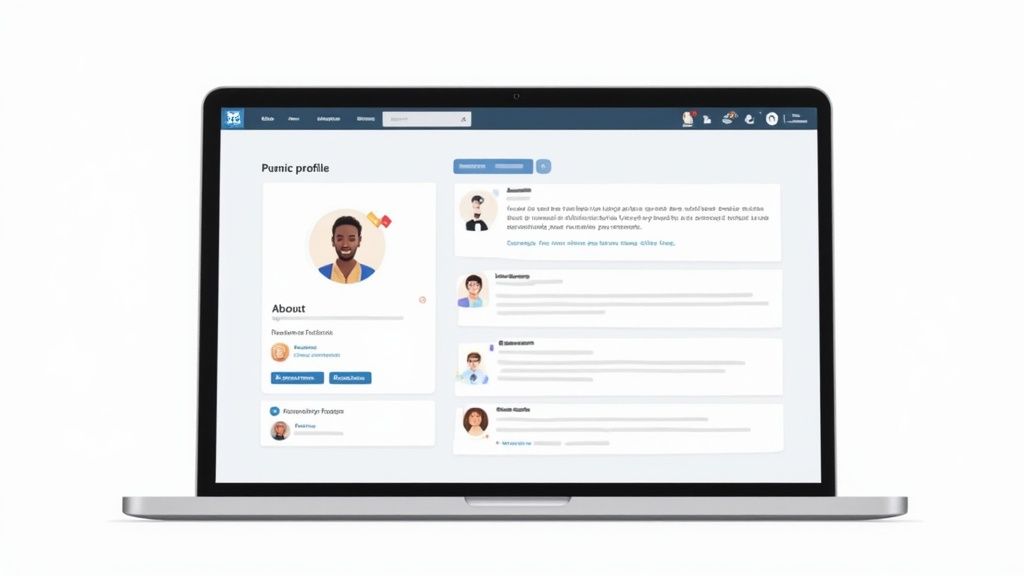
If your LinkedIn profile is your digital home, then your content is the conversation that draws people in. A polished profile is great, but without a steady stream of valuable ideas, it’s just a billboard in the desert. Building a powerful personal brand on LinkedIn means showing up consistently, and that all starts with a smart strategy—not just posting on a whim.
The biggest mistake I see professionals make is trying to be everything to everyone. The most effective personal brands are laser-focused. They own a specific niche. This is where content pillars come in.
Define Your Core Content Pillars
Your content pillars are the 2-3 core topics you want to be known for. These are the subjects you could talk about for hours, where your professional expertise meets your personal passion and unique point of view. Think of them as the foundation for everything you'll ever post.
For example, a B2B sales leader might choose these pillars:
- Social Selling Tactics: Real-world tips for building a pipeline without spammy cold calls.
- Sales Team Leadership: Hard-won lessons on coaching, motivating, and managing high-performing teams.
- Buyer Psychology: Deep dives into the "why" behind a purchase and how to truly align with a prospect's needs.
These pillars give your brand a clear focus. Your audience quickly learns what you're about, which turns casual connections into a loyal community that genuinely trusts what you have to say. Every post should ladder up to one of these pillars, reinforcing your authority again and again.
Find Your Authentic Voice
Once you know what to talk about, the next piece of the puzzle is how you talk about it. Your voice is your personality in written form. It's the secret sauce that makes your content feel like it came from you, not some generic corporate handbook.
Are you analytical and obsessed with data? Witty and a bit irreverent? Or are you more empathetic and story-driven? There isn't a right or wrong answer here, but it absolutely has to be authentic. Faking a persona is exhausting and people can spot it from a mile away.
The goal isn't just to sound "professional"—it's to be a professional who is also a human. Share your wins, but also talk about what you learned from a tough loss. Give your real opinion. People connect with people, not perfectly polished robots.
Here's a practical tip: grab your phone and record yourself talking about one of your content pillars for two minutes, unscripted. Then, transcribe what you said. The words, the rhythm, and the phrases you use naturally are the raw ingredients of your authentic voice.
Master Different Content Formats
LinkedIn gives you a whole toolbox of content formats to play with. A solid content strategy mixes things up to keep your audience hooked, because different formats achieve different goals and appeal to different people.
To help you plan, I've put together a quick look at the most common formats and their engagement potential.
LinkedIn Content Format Engagement Potential
This table breaks down the various content types you can use on LinkedIn, what they're best suited for, and the kind of engagement you can generally expect. Use it to build a more varied and effective content calendar.
| Content Format | Best For | Typical Engagement Level |
|---|---|---|
| Text-Only Posts | Sharing quick insights, asking questions, and starting conversations. | High (Easy to consume) |
| Image/Carousel Posts | Breaking down complex ideas, showcasing data, or telling a visual story. | Very High (Stops the scroll) |
| Short-Form Video | Demonstrating a process, sharing personal stories, or giving a behind-the-scenes look. | High (Builds connection) |
| Polls | Gathering audience opinions, sparking quick engagement, and market research. | High (Low-effort interaction) |
| Documents (PDFs) | Sharing in-depth guides, case studies, or presentation slides. | Medium-High (High value) |
As you can see, each format has its place. Don't just get stuck in a rut using only one.
A simple text post might tell a powerful story about overcoming a sales objection and spark a huge conversation. You could then follow that up with a carousel post that breaks down the exact framework you used into five simple, visual steps.
The key is to match the message to the medium. And don't forget to track what's working. Using a good LinkedIn post analyzer can show you exactly what's resonating with your audience so you can double down on it. That data-driven feedback loop is what separates the pros from the amateurs.
Creating a Consistent Posting and Engagement Rhythm
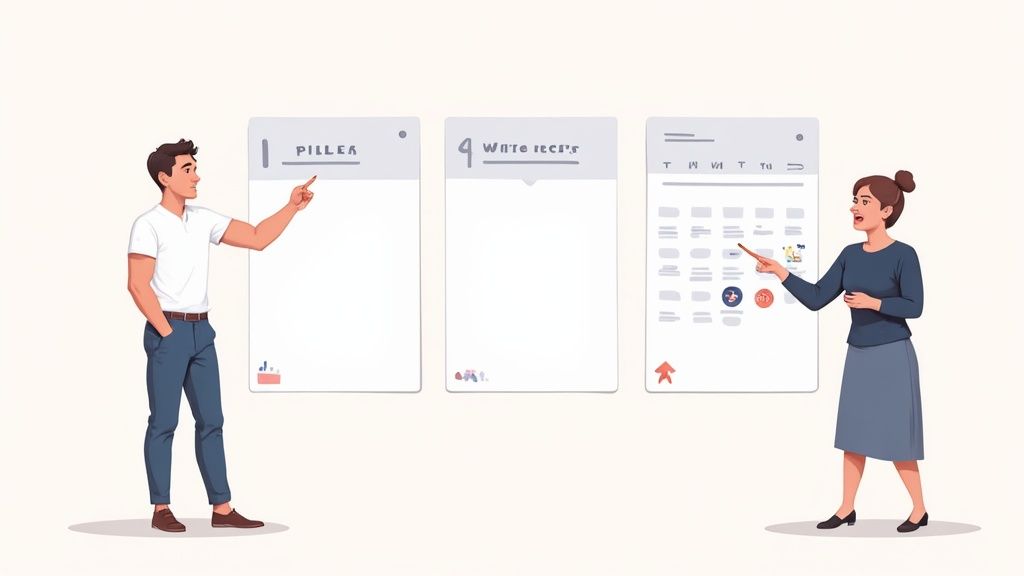
A brilliant content strategy collecting dust is useless. The real work of building a personal brand on LinkedIn starts when you move from random, sporadic posts to a predictable, steady rhythm.
This is how you train both the LinkedIn algorithm and your audience to pay attention. Consistency turns your profile from a quiet digital outpost into a go-to source for valuable insights.
But let's clear up a common myth: consistency does not mean you have to post every single day. That idea is a fast track to burnout. The real goal is to find a pace you can actually stick with, one that allows you to share high-quality thoughts, not just add to the noise. For some, that’s three times a week. For others, maybe four. The number itself is less important than your commitment to a regular schedule.
Building Your Posting Cadence
So, what's the right cadence for you? It starts with an honest look at your calendar. Don't commit to posting daily if you’re already swamped. It's far better to publish three excellent, well-crafted posts a week than it is to scramble and push out five mediocre ones. A realistic rhythm is what builds momentum you can maintain for the long haul.
The secret to making this manageable is content batching. Instead of waking up each morning thinking, "What should I post today?", block off a chunk of time once a week to get it all done. Maybe it’s two hours on a Friday afternoon. Use that time to plan, write, and polish everything for the week ahead.
This simple shift in process is a game-changer:
- It creates focus: You can drop into a creative flow state without the constant mental gear-shifting of daily life.
- It ensures quality: With more time, you can refine your ideas and sharpen your writing.
- It frees up your week: Your content is ready to go, so you can spend your time engaging, not just creating.
Once your posts are drafted, use a scheduling tool to put your distribution on autopilot. This way, your content goes live at the best times, even if you’re tied up in meetings.
Consistency is the currency of trust on LinkedIn. When your audience knows they can count on you for regular insights, they are far more likely to engage with your work, trust your expertise, and remember your name when an opportunity arises.
Engagement Is a Two-Way Street
Okay, so your content is scheduled. You’re only halfway there. The other, and arguably more critical, half of the equation is engagement. LinkedIn is a social platform, after all. Building a brand means being an active member of the community, not just broadcasting into the void.
This doesn't mean you need to live on the platform. It's about being intentional. Carve out 15-20 minutes each day for focused engagement. One powerful tactic is the "first hour" rule: after your post goes live, stick around for the first hour to reply to every single comment. This sends a strong signal to the LinkedIn algorithm that your post is sparking a conversation, which can give its reach a serious boost.
How to Engage for Maximum Impact
Not all engagement is created equal. A quick "great post!" is better than silence, but it won’t move the needle. Your goal is to leave thoughtful comments that genuinely add to the conversation and subtly showcase your own expertise.
Here’s how to make your comments stand out from the crowd:
- Add a new perspective: "This is a great point. I'd add that another factor to consider is..."
- Ask a thoughtful question: "I love this framework. How have you seen it work when dealing with [specific scenario]?"
- Share a relevant experience: "This reminds me of a time I worked with a client on a similar challenge. We found that..."
This kind of interaction accomplishes two things at once. It gives value back to the original poster and their audience, and it positions you as a knowledgeable peer. This is how you start turning passive connections into real professional relationships.
Think about it: your comments are a form of micro-content that builds your personal brand on LinkedIn. The top creators on the platform live by this. In fact, an analysis of influential accounts found that among creators with under 500,000 followers, a staggering 72% post at least once every two days. If you want to dive deeper, you can read more about the trends shaping LinkedIn personal branding and see just how much frequency matters. It all proves one thing: a steady rhythm of both posting and engaging is the foundation of visibility and growth.
Getting Your Content in Front of the Right People
Hitting "post" is just the starting line. I’ve seen countless professionals craft brilliant content only to have it fizzle out because they didn't have a plan to get it seen. The real magic happens when you intentionally get your work in front of the decision-makers, peers, and potential clients who can actually move the needle for your career.
Think of it like creating ripples. A single post can just be a drop, or it can be the start of a wave that reaches far beyond your immediate network. One of the simplest, most organic ways to start this is by tagging people and companies strategically.
When you mention a project you worked on with a specific company or build on an idea from an industry thought leader, tag them. This isn't about spamming big names for a cheap view. It’s about giving credit where it's due and adding valuable context. A single, thoughtful tag can notify the right person, and if they share it, your content suddenly lands in front of their entire audience.
Smart Ways to Amplify Your Work
Beyond a simple tag, you need a multi-pronged approach to make sure every piece of content works as hard as it can for you. The goal is to get maximum mileage from every single idea.
Here are a few tactics I've seen work time and time again:
- Be Strategic with Hashtags: Don't just slap on the most popular tags. Use a smart mix: a broad industry hashtag (like #B2BSales), a more niche one (like #SalesEnablement), and maybe even a unique branded one (#YourNameConsulting). Stick to 3-5 highly relevant tags per post for the best results.
- Repurpose Your Winners: Did a text post get a ton of engagement? Don't let it die there. Turn that same concept into a carousel, a script for a short video, or even a more detailed PDF guide you can share. This breathes new life into your best ideas without you having to constantly start from scratch.
- Team Up and Cross-Promote: Find another expert in a complementary space and partner up. You could co-author an article, jump on a LinkedIn Live together, or just make a simple pact to share each other's best content. This is one of the fastest shortcuts to getting in front of a brand new, highly relevant audience.
Your content's journey doesn't end when you hit "post." That first hour is your golden window. Jump on every comment, answer every question, and keep the conversation going. This burst of activity signals to the LinkedIn algorithm that you've shared something valuable, which can give your post a significant organic boost.
Measuring What Actually Matters
Amplification is great, but it’s pointless if you can't tell what’s actually working. This is where so many people get tripped up—they get addicted to vanity metrics like likes and raw impressions. Sure, those numbers feel good, but they don't pay the bills. The real value is in the analytics that show you're making genuine progress toward your business goals.
You have to look past the surface-level data and focus on the numbers that prove you're reaching the right people and inspiring the right actions.
Here’s a look at the LinkedIn creator analytics dashboard, which gives you a bird's-eye view of your content's performance.
This dashboard is a decent start for tracking impressions and engagement, but the real story is in the details of each individual post.
Analytics That Signal Real Progress
Instead of obsessing over impressions, let's focus on the numbers that tell you if your brand is truly making an impact. These are the metrics that bridge the gap between your LinkedIn activity and tangible business outcomes.
Start tracking these key performance indicators:
- Profile Views: Is your content making people curious enough to click on your name? A steady climb in profile views is a fantastic sign that your message is compelling people to learn more about who you are and what you do.
- Follower Demographics: Who are your new followers? Pay close attention to their job titles, industries, and the companies they work for. If you’re suddenly attracting more VPs of Sales from SaaS companies, you know your content is landing squarely in your target audience.
- Inbound Connection Requests: The quality here is everything. Are you getting generic requests, or are people sending personalized notes that mention a specific post you wrote? That’s a direct signal that your brand is resonating on a personal level.
- Direct Messages (DMs): This is the ultimate goal—turning public content into private conversations. Keep an eye on how many DMs you get from people outside your network who reference something you posted. That's a direct pipeline to new opportunities.
When you focus on these metrics, you stop just "posting content" and start strategically building an inbound interest engine. That’s the entire point of building a powerful personal brand on LinkedIn. To really quantify this, you can even connect these metrics back to financial results. A great first step is using a tool to calculate the return on your time, like this handy LinkedIn ROI calculator, which helps translate your activity into real business value.
Answering Your Top Questions About Building a LinkedIn Brand
As you dive into building your personal brand on LinkedIn, you’re going to have questions. That’s not just normal; it’s a good sign. It means you're thinking critically about what works. Let's tackle some of the most common hurdles I see professionals run into.
How Many Content Pillars Do I Really Need?
I get this one all the time. Everyone seems to wonder just how narrow their focus should be.
From what I’ve seen, the magic number is two to three core content pillars. Any fewer and you risk being a one-trick pony, talking about the same thing over and over. Go with more than three, and your message gets muddled. People won't know what you really stand for.
Think of it this way: your pillars are the main chapters of your professional story. For example, a cybersecurity consultant might build their brand on:
- Threat Intelligence Analysis: Breaking down complex cyber threats for business leaders.
- Team Leadership & Development: Sharing hard-won lessons on building elite security teams.
- Incident Response Strategy: Walking through frameworks for handling a crisis when it hits.
This laser-focus ensures every post you make reinforces your expertise and builds your authority in a very specific arena.
Your content pillars aren't just topics; they are a promise to your audience. They set the expectation for the kind of value you will consistently deliver, which is the bedrock of building trust and a memorable personal brand on LinkedIn.
How Do I Handle Negative Comments or Trolls?
First things first: don't panic. A negative comment isn't a crisis. In fact, it's a sign that people are actually paying attention. The trick is to handle it with grace, which can paradoxically make your brand look even stronger.
If someone disagrees or offers genuine criticism, jump in and respond publicly and politely. Thank them for their perspective, clarify your point without getting defensive, and then move on. It shows everyone else that you're confident and open to a real conversation.
But what about the trolls? The people who are just there to cause trouble? The rule here is simple: don't engage. You have zero obligation to give bad-faith actors a platform. Just delete their comment, block them, and get on with your day. Your energy is your most valuable asset—spend it on productive conversations, not pointless battles.
What’s the Real ROI of My Time on LinkedIn?
This is the big one. How do you know if all this effort is actually paying off? To stay motivated, you have to measure the right things. The value isn't always a straight line to a sale, but you can absolutely track indicators that show your brand is creating real, tangible value.
Forget vanity metrics like likes and total views. They feel good, but they don't pay the bills. Instead, track the numbers that are directly tied to business opportunities.
- Qualified Profile Views: Are the right people looking at your profile? Think target companies and ideal client titles. This tells you if your content is hitting the mark.
- Inbound DMs: How many messages are you getting from prospects or potential partners who mention your content? This is a huge buying signal.
- Website Clicks: If you're dropping links to your site, are people actually clicking them? Check your analytics for referral traffic from LinkedIn.
- Conversation-to-Meeting Rate: This is where the rubber meets the road. Of all the new DM conversations you start, how many are turning into actual sales calls?
Once you start tracking these metrics, the ROI becomes crystal clear. You're no longer just "posting on LinkedIn." You're building a reliable system that attracts opportunities and warms up leads so you don't have to. Your personal brand on LinkedIn becomes a predictable engine for growth, not just a content-publishing exercise.
Ready to turn your LinkedIn presence into a predictable revenue machine? At GetViews.AI, we help you transform your expertise into high-performing content that builds pipeline, automates outreach, and puts your growth on autopilot. Learn more and see how it works at https://getviews.ai.