10 B2B Lead Generation Best Practices for 2025
Discover 10 actionable B2B lead generation best practices for 2025. Drive predictable pipeline with expert tactics for LinkedIn, ABM, SEO, and more.
Wilmer KarlssonTarstad
In the crowded B2B landscape, relying on outdated, high-volume tactics like aggressive cold calling is a recipe for wasted resources and diminished returns. The most successful growth teams aren't just generating leads; they're engineering predictable revenue engines. This requires a sophisticated, multi-channel, and buyer-centric approach that builds trust, establishes authority, and meets prospects exactly where they are. Gone are the days of spray-and-pray outreach; today's market demands precision, value, and authenticity to capture the attention of decision-makers.
This guide provides a deep dive into the 10 b2b lead generation best practices that modern sales and marketing leaders are using to cut through the noise and build scalable growth systems. We will move beyond generic advice to give you actionable frameworks and tactical playbooks for everything from hyper-targeted Account-Based Marketing (ABM) to transforming your LinkedIn presence into a consistent source of high-quality inbound opportunities. You will learn how to integrate content marketing, strategic outreach, and intelligent automation to create a cohesive strategy that attracts, engages, and converts your ideal customers.
Whether you're a founder aiming for predictable pipeline, a sales leader looking to empower your team, or a marketer tasked with building a powerful brand presence, these strategies will equip you to build a resilient and highly effective lead generation machine. Forget chasing leads; it's time to build a system that brings them directly to you. We'll explore how to execute these best practices effectively, covering everything from content creation and distribution to measuring ROI and optimizing your funnel for maximum impact.
1. Master Hyper-Targeted Account-Based Marketing (ABM)
Account-Based Marketing (ABM) inverts the traditional marketing funnel. Instead of casting a wide net to capture as many leads as possible, ABM focuses your sales and marketing resources on a select list of high-value target accounts, treating each one as a market of its own. This approach is one of the most effective B2B lead generation best practices for companies with long, complex sales cycles and high-value deals.
The core principle is to achieve deep penetration within a target organization by engaging multiple stakeholders in the buying committee with highly personalized content and outreach. This strategy fosters a strong alignment between sales and marketing teams, who must collaborate to identify key accounts, map out decision-makers, and execute coordinated campaigns.
How to Implement Hyper-Targeted ABM
Effective ABM requires a structured, multi-channel approach. It's not just about sending a few personalized emails; it's about creating an orchestrated experience for the entire account.
- Develop ICPs and Tier Your Accounts: Start by defining your Ideal Customer Profile (ICP). Then, segment your target accounts into tiers. For example, Tier 1 accounts get bespoke 1-to-1 campaigns, Tier 2 receives lightly customized "1-to-few" messaging for clusters of similar companies, and Tier 3 gets broader "1-to-many" programmatic campaigns.
- Leverage Intent Data: Use platforms like Bombora or 6sense to identify accounts actively researching solutions like yours. This data allows you to prioritize outreach to companies that are already in-market, dramatically increasing conversion rates.
- Coordinate Multi-Channel Plays: A successful play involves a synchronized sequence of touchpoints. This could include targeted LinkedIn ads aimed at the buying committee, personalized Connection Requests from your sales team, followed by value-driven emails and even high-impact direct mail.
- Create Account-Specific Content: Move beyond generic blog posts. Develop assets that speak directly to a target account's pain points, such as a custom ROI calculator referencing their industry benchmarks or a case study featuring a similar company.
- Measure Account-Level Engagement: Shift your focus from individual lead scores to account-level engagement. Track how many contacts within a target account are interacting with your brand across all channels over time. This provides a truer picture of your influence and buying intent.
2. Leverage LinkedIn for Powerful Outreach and Content Marketing
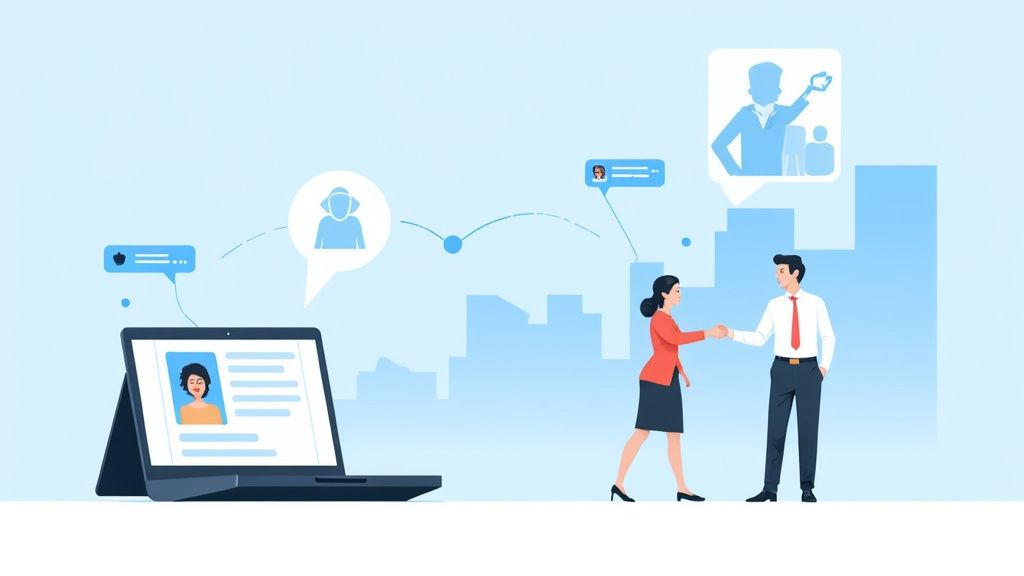
In the B2B landscape, LinkedIn has evolved from a simple professional networking site into a dominant lead generation powerhouse. It combines the functions of a content platform, a direct outreach tool, and a community hub, making it an indispensable channel for connecting with high-value decision-makers. This strategy is one of the most effective B2B lead generation best practices because it allows you to build authority and trust before the first sales conversation even happens.
The goal is to create a flywheel effect: you publish valuable content that attracts and educates your ideal customer, engage with their activity to build rapport, and then use personalized outreach to convert that warm interest into a qualified sales opportunity. This approach, championed by social selling experts like Jill Rowley, replaces disruptive cold outreach with value-driven, relationship-based engagement.
How to Implement a LinkedIn Lead Generation Strategy
A successful LinkedIn strategy requires a consistent, two-pronged approach that blends content publication with targeted, authentic engagement. It’s about being a valuable member of the community, not just a seller.
- Optimize Your Profile and Company Page: Your personal profile and company page are your digital storefronts. Ensure they are fully optimized with a clear value proposition, relevant keywords, and compelling visuals. Your personal headline should speak directly to the problem you solve for your target audience.
- Share High-Value, Non-Salesy Content: Consistently publish content (3-4 times per week) that educates, informs, or entertains your ICP. Focus on solving their problems, not pitching your product. Formats like text-only posts, carousels, and short videos perform exceptionally well. For a deeper dive, explore this comprehensive guide to crafting a winning LinkedIn content strategy.
- Engage Authentically Before You Connect: Before sending a connection request, interact with your prospect’s content. Leave thoughtful comments on their posts to get on their radar in a genuine, non-intrusive way. This "warm-up" significantly increases connection acceptance rates.
- Personalize Every Connection Request: Ditch the generic template. Mention a shared interest, a mutual connection, or a specific piece of content they recently posted. This small effort shows you’ve done your research and value them as an individual.
- Utilize LinkedIn Sales Navigator: This premium tool is essential for serious B2B prospecting. Use its advanced search filters to build highly targeted lead lists, save key accounts, and receive alerts on your prospects’ activity, giving you timely reasons to reach out.
3. Build Authority with Content Marketing and Lead Magnets
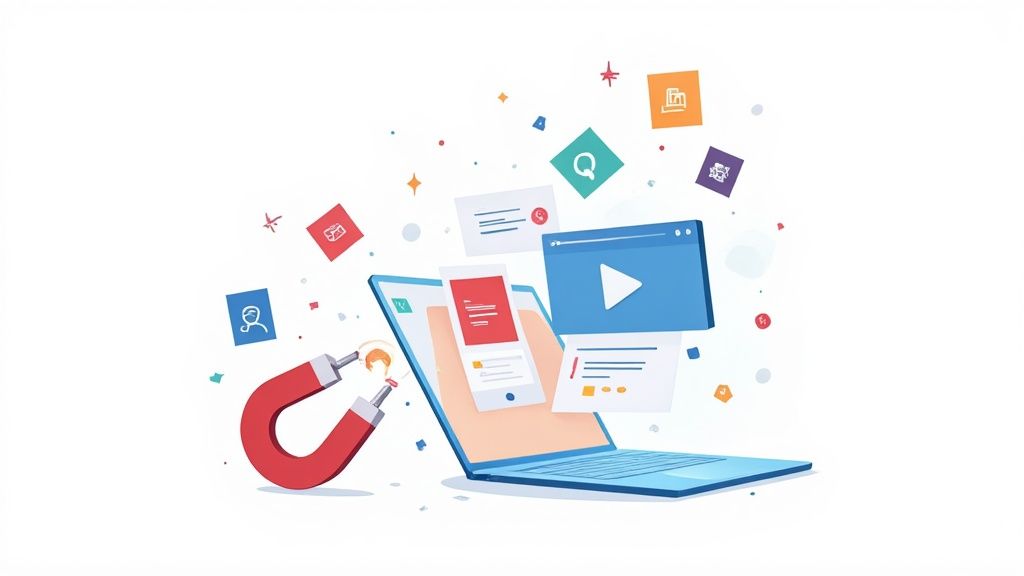
Content marketing is the strategic foundation for attracting, educating, and converting prospects by creating and distributing valuable, relevant, and consistent content. Instead of directly pitching your products, you provide solutions to your audience's problems, positioning your brand as a trusted authority and indispensable resource. This is a cornerstone of modern B2B lead generation best practices, shifting the focus from outbound interruption to inbound attraction.
The strategy works through a two-pronged approach: ungated thought leadership (like blogs and articles) builds brand awareness and trust, while high-value gated assets (like ebooks, webinars, or reports) act as lead magnets to capture contact information. Companies like HubSpot, which generates thousands of leads monthly through its blog and templates, and Gong, which uses original research on sales calls to attract its ideal buyers, have built empires on this model.
How to Implement a Content and Lead Magnet Strategy
A successful content engine requires more than just writing; it demands a systematic process for creation, distribution, and conversion.
- Create Data-Driven Pillar Content: Use keyword research to identify high-intent topics your ICP is searching for. Build comprehensive "pillar pages" on these core topics and create a "topic cluster" of related blog posts that link back to the main pillar. This strategy boosts SEO authority and user engagement.
- Develop High-Value Lead Magnets: Gate your most valuable, in-depth content. This could be an original industry report, a comprehensive ebook, a practical template, or a free assessment tool. The key is to offer something so valuable that prospects are willing to exchange their contact details for it.
- Implement Smart Lead Capture: Use clear calls-to-action (CTAs) within your ungated content to direct readers to your lead magnets. Keep your forms short and simple, asking for only essential information initially (e.g., name, email, company). Use progressive profiling on subsequent downloads to gather more data without creating friction.
- Promote and Repurpose Extensively: Your content’s value is unlocked through distribution. Promote every piece across social media, email newsletters, and partner channels. Maximize your efforts by turning a single webinar into blog posts, social media clips, and a slide deck. Exploring various content repurposing strategies can significantly extend the reach of each asset.
- Analyze and Optimize Performance: Track which content pieces and lead magnets generate the most engagement and, more importantly, the highest-quality leads. Double down on what works, refresh top-performing content annually, and remove or update underperforming assets.
4. Build a Scalable Engine with Email Marketing and Automation
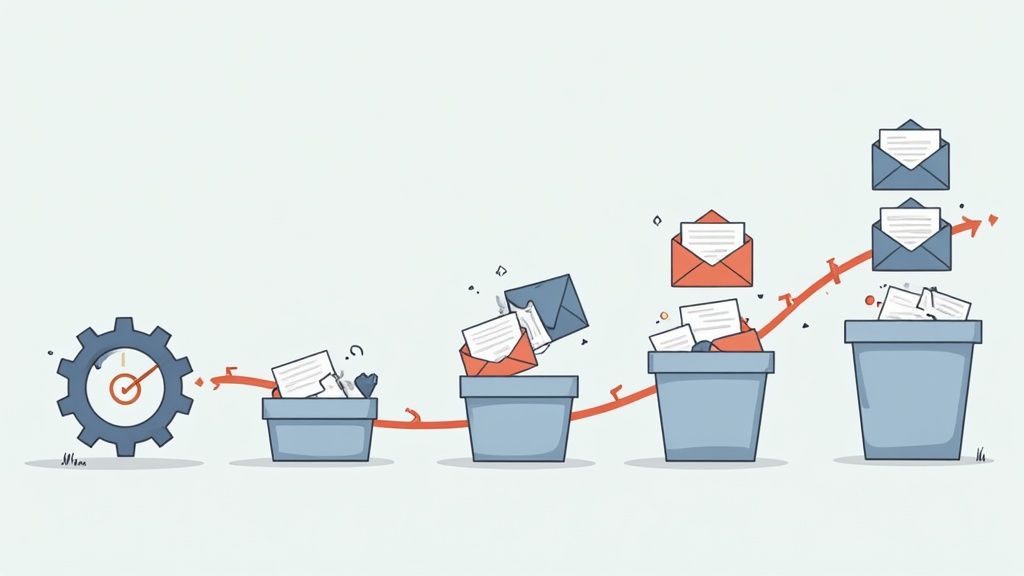
Despite the rise of social media, email remains a cornerstone of effective B2B communication. Modern email marketing goes far beyond simple newsletters; it’s about using automation to deliver personalized, timely, and relevant messages that nurture relationships at scale. This strategy is one of the most powerful B2B lead generation best practices for guiding prospects through a complex buying journey and maintaining engagement over time.
The goal is to move beyond generic "email blasts" and create intelligent, automated workflows that respond to a lead's behavior. By segmenting your audience and triggering campaigns based on specific actions, you can ensure your message resonates, builds trust, and keeps your brand top-of-mind from initial awareness to the final purchase decision. Platforms like HubSpot and ActiveCampaign have popularized this data-driven approach, making sophisticated nurturing accessible to businesses of all sizes.
How to Implement Email Marketing and Automation
A successful email strategy requires a blend of smart segmentation, compelling content, and robust automation. It’s about sending the right message to the right person at exactly the right time.
- Segment Your Lists Intelligently: Don't send the same email to everyone. Segment your contacts based on firmographics (industry, company size), lead source (webinar, ebook download), and behavior (pages visited, emails opened). This allows for hyper-relevant messaging.
- Develop Behavior-Triggered Workflows: Set up automated sequences that trigger based on user actions. For instance, if a prospect downloads a case study about a specific service, enroll them in a drip campaign that offers more in-depth content on that topic. You can explore a full guide to automated lead generation on getviews.ai for more advanced workflows.
- Personalize Beyond the First Name: Use dynamic content to reference a lead's company, job title, or a recent interaction they had with your brand. For example: "I saw your company, [Company Name], is hiring for roles in [Department], which suggests you're scaling your team."
- Implement Lead Scoring: Assign points to leads based on their profile and engagement level. A high score (e.g., a director from a target account who visited your pricing page) signals sales-readiness and can trigger an alert for your BDR team to follow up immediately.
- Focus on a Single, Clear CTA: Each email should have one primary goal. Whether it's to book a demo, download a guide, or read a blog post, make the next step obvious and easy to take. Avoid overwhelming the reader with multiple conflicting requests.
5. Host High-Value Webinars and Virtual Events
Webinars and virtual events are powerhouse tools for B2B lead generation, allowing you to engage a captive audience in real time. Instead of just telling prospects about your expertise, you can show them. This format establishes authority, provides immense value upfront, and captures high-intent leads who are actively seeking solutions to their problems. This is one of the most scalable B2B lead generation best practices for engaging prospects at multiple stages of the buyer's journey.
The core principle is to offer targeted, educational content that solves a specific pain point for your Ideal Customer Profile (ICP). By attracting an audience with a relevant topic, you create a direct line of communication, build trust through expertise, and can seamlessly introduce your solution. Companies like Salesforce, which hosts massive industry virtual events, demonstrate the immense reach and lead-generating power of this strategy.
How to Implement High-Value Webinars
A successful webinar is more than just a presentation; it's a well-orchestrated event designed to convert attendees into qualified leads. This requires a strategic approach from promotion to post-event follow-up.
- Choose a Hyper-Relevant Topic: Don't talk about your product features. Instead, address a critical challenge your target audience faces. For example, a sales intelligence company like Gong hosts webinars on topics like "Mastering the Discovery Call," which attracts their core audience of sales leaders.
- Promote Extensively and Strategically: Begin promotion 3-4 weeks in advance across multiple channels: email lists, social media (especially LinkedIn Events), paid ads, and partner co-promotion. Send reminder emails the day before, the morning of, and 5-10 minutes before the webinar starts to maximize attendance.
- Engineer Engagement: Keep webinars to 45-60 minutes. Incorporate interactive elements like polls, Q&A sessions, and chat to maintain audience attention. A disengaged audience won't hear your call-to-action.
- Have a Clear Call-to-Action (CTA): Near the end of the presentation, offer a clear next step. This could be a demo request, a free trial, or a downloadable resource that complements the webinar content. Make it irresistible and relevant.
- Segment and Nurture Post-Event: Your job isn't done when the webinar ends. Within 24 hours, send a follow-up email with the recording. Segment your list into attendees and no-shows for tailored nurturing sequences, prioritizing follow-up with those who attended live and showed high engagement.
6. Build High-Impact Referral and Partnership Programs
Tapping into your existing network of satisfied customers and industry partners is one of the most cost-effective and powerful B2B lead generation best practices. Referral and partnership programs formalize word-of-mouth marketing, turning happy clients and strategic allies into an extension of your sales team. These leads often arrive with a high degree of trust and intent, significantly shortening sales cycles.
The strategy is built on mutual benefit. Customers are rewarded for their advocacy, and partners gain access to new revenue streams or complementary solutions for their own clients. This approach generates a warm, pre-qualified pipeline, famously fueling the growth of companies like Dropbox, which achieved a 60% user base increase through its referral program, and HubSpot, whose robust partner network drives a significant portion of its enterprise deals.
How to Implement Referral and Partnership Programs
A successful program requires a clear structure, compelling incentives, and minimal friction for participants. It should be effortless to refer and rewarding to do so.
- Make Referrals Effortless: Implement a simple, trackable process. Use dedicated referral software (like Referral Rock or PartnerStack) to provide partners and customers with unique links, a clear dashboard, and automated reward fulfillment. The easier it is to participate, the higher your engagement will be.
- Offer Compelling, Tiered Incentives: Move beyond a simple one-off payment. Design a tiered reward system that motivates high performance. This could include escalating commissions, co-marketing opportunities, or exclusive access to new features. The incentive should be meaningful enough to capture their attention and effort.
- Equip Your Partners for Success: Don't expect partners to sell on your behalf without support. Provide them with a comprehensive partner kit that includes sales collateral, email templates, case studies, and clear talking points. This ensures they can represent your brand accurately and effectively.
- Integrate "The Ask" into the Customer Journey: Train your customer success and account management teams to identify happy customers and proactively ask for referrals at key moments, such as after a positive quarterly business review or a successful project completion.
- Co-Market with Strategic Allies: Collaborate with non-competing companies that serve a similar ICP. Run joint webinars, create co-branded ebooks, or host shared events. This exposes your brand to a new, relevant audience and generates leads for both parties.
7. Launch Scalable Paid Advertising Campaigns
Paid advertising, encompassing Search Engine Marketing (SEM), display ads, and social media ads, offers a direct and scalable method for reaching qualified prospects precisely when and where they are active. Unlike organic strategies that take time to build momentum, paid campaigns can generate traffic, leads, and brand visibility almost instantly, making them a cornerstone of modern B2B lead generation best practices.
The power of this approach lies in its precision targeting and measurability. Platforms like Google Ads and LinkedIn Ads allow you to target prospects based on firmographics, job titles, search intent, and online behavior. This ensures your budget is spent on reaching the most relevant audiences, driving them to dedicated landing pages designed to convert.
How to Implement a Paid Advertising Strategy
A successful paid strategy requires meticulous planning, continuous optimization, and a deep understanding of your target audience's digital footprint. It's about more than just boosting a post; it's about building a predictable lead-generation machine.
- Select the Right Platforms: Begin where your audience is most concentrated. Use Google Ads to capture active search intent for problem/solution keywords. Leverage LinkedIn Ads for its unparalleled professional targeting capabilities, reaching specific job titles, industries, and company sizes.
- Create Dedicated Landing Pages: Never send paid traffic to your homepage. For each campaign, build a dedicated landing page with a single, clear call-to-action (CTA). The messaging on the page should mirror the ad copy to create a seamless user experience and maximize conversions.
- Implement Granular Targeting and Retargeting: Use detailed audience targeting to reduce your cost-per-click (CPC) and improve lead quality. Build retargeting audiences to re-engage website visitors who didn’t convert on their first visit, serving them ads that address potential objections or offer different value propositions.
- A/B Test All Campaign Elements: Continuously test everything: ad headlines, copy, imagery, CTAs, and landing page layouts. Small, incremental improvements from A/B testing compound over time, significantly lowering your cost-per-lead (CPL) and increasing overall ROI.
- Optimize with Negative Keywords and Conversion Tracking: In SEM, use an extensive list of negative keywords to prevent your ads from showing for irrelevant searches, which eliminates wasted spend. Ensure conversion tracking and attribution models are set up correctly to understand which campaigns and channels are truly driving your pipeline.
8. Build a High-Performing Sales Development Team
Building a dedicated Sales Development Representative (SDR) or Business Development Representative (BDR) team is a foundational strategy for creating a predictable sales pipeline. This approach separates the roles of prospecting and closing, allowing specialized teams to excel at their core functions. SDRs focus exclusively on top-of-funnel activities: identifying, researching, engaging, and qualifying new leads before handing them off to Account Executives (AEs).
This specialization is one of the most scalable B2B lead generation best practices because it creates a systematic engine for generating opportunities. Instead of relying solely on inbound marketing or ad-hoc outreach from AEs, a dedicated SDR team executes structured, multi-channel prospecting sequences to consistently fill the top of the funnel with qualified appointments. This focus drives efficiency and ensures a steady flow of opportunities for the closing team.
How to Build an Effective SDR Program
A successful SDR program is built on a foundation of clear processes, the right technology, and continuous coaching. It requires more than just hiring people to make calls; it's about engineering a repeatable system for generating pipeline.
- Define Clear Qualification Criteria: Equip your SDRs with a precise Ideal Customer Profile (ICP) and a clear qualification framework like BANT (Budget, Authority, Need, Timeline) or MEDDIC. This ensures they spend their time on prospects who can realistically become customers and pass only high-quality leads to AEs.
- Arm SDRs with a Powerful Tech Stack: Provide tools that enhance efficiency and effectiveness. This includes sales engagement platforms like SalesLoft or Outreach for managing sequences, data providers like Apollo.io or ZoomInfo for accurate contact information, and a reliable CRM to track all activities.
- Develop Multi-Channel, Multi-Touch Sequences: Modern prospecting is not just about cold calls or emails. Create orchestrated 7-10 touchpoint sequences that blend personalized emails, phone calls, LinkedIn connection requests, and video messages over several weeks. Vary the messaging in each touchpoint to provide value and stay top of mind.
- Hire for Coachability and Resilience: The best SDRs possess a unique combination of grit, curiosity, and a strong desire to learn. Prioritize these traits over direct experience, as a coachable individual can be trained on your specific methodology and market.
- Implement a Rigorous Coaching Cadence: Don't leave SDRs to figure things out on their own. Implement weekly one-on-ones, team-wide call reviews, and regular training sessions. Continuous feedback and coaching are critical for skill development and preventing burnout.
9. SEO and Organic Search Optimization
Search Engine Optimization (SEO) is the practice of enhancing your website and content to rank higher in search engine results for keywords your ideal customers are using. Unlike paid channels that require constant investment, a strong organic presence acts as a 24/7 lead generation engine, attracting high-intent prospects who are actively seeking solutions. This makes SEO one of the most sustainable and high-ROI B2B lead generation best practices you can implement.
The goal is to establish your brand as a trusted authority by providing valuable answers to your audience's most pressing questions. When a prospect searches for a solution to their business problem and consistently finds your insightful content, you build credibility and trust long before the first sales call. This strategy, championed by industry leaders like Backlinko and HubSpot, turns your website into a powerful magnet for qualified inbound leads.
How to Implement SEO for Lead Generation
Effective B2B SEO goes beyond simply targeting keywords; it's about building a content ecosystem that supports the entire buyer's journey and signals your expertise to search engines.
- Build Topical Clusters Around Pillar Content: Instead of writing random blog posts, create comprehensive "pillar" pages on broad topics central to your business. Surround these pillars with shorter, related "cluster" articles that link back to the main page. This structure signals topical authority to Google and helps you rank for a wider range of keywords.
- Target Commercial Intent Keywords: Conduct thorough keyword research using tools like Ahrefs or Semrush to identify terms that indicate a user is close to making a purchase. Focus on keywords with phrases like "software," "provider," "services," or "for [your industry]," which attract traffic that is more likely to convert.
- Create Comprehensive, Expert-Led Content: For competitive topics, aim to create the most thorough and helpful resource available. This often means long-form content (3,000+ words) that includes original data, expert quotes, and practical examples. This depth satisfies search intent and naturally attracts high-quality backlinks.
- Optimize for Technical and On-Page Factors: Ensure your website is technically sound. Focus on improving site speed, mobile-friendliness, and Core Web Vitals. Implement schema markup to help search engines understand your content and gain rich snippets in search results, and use a strategic internal linking structure to guide users and spread link equity.
10. Implement Advanced Personalization and Dynamic Content
In an era of information overload, generic messaging falls flat. Advanced personalization and dynamic content move beyond simply using a prospect's first name in an email. This strategy leverages data and technology to deliver tailored experiences, messaging, and content based on a visitor's characteristics, behavior, and stage in the buyer's journey. This is a cornerstone of modern B2B lead generation best practices because it makes prospects feel understood, significantly boosting engagement and conversion rates.
The principle is to create a 1-to-1 experience at scale. By dynamically changing website content, email copy, or chatbot interactions based on firmographics, past behavior, or intent signals, you can present the most relevant information to each individual user. This transforms your digital properties from static brochures into interactive, consultative platforms that guide prospects toward a solution.
How to Implement Personalization and Dynamic Content
A successful personalization strategy requires a solid data foundation and a clear understanding of your audience segments. It's about delivering the right message to the right person at the right time.
- Start with First-Party Data: Begin by leveraging the data you already own. Use information from your CRM, form submissions, and on-site behavior to segment your audience. You can personalize based on industry, company size, job title, or pages they've visited.
- Create Dynamic Website and Landing Page Experiences: Use tools like HubSpot or Optimizely to create different versions of your key pages. For example, a visitor from the manufacturing industry could see case studies and hero images relevant to them, while a visitor from finance sees a completely different set of visuals and proof points.
- Leverage Behavior-Triggered Messaging: Implement chatbots and email automation that adapt based on user actions. If a prospect downloads an ebook on a specific topic, your follow-up emails and chat prompts from a tool like Drift should reference that interest and offer a logical next step, like a related webinar or a demo.
- Use Dynamic CTAs: Don't show every visitor the same call-to-action. A first-time visitor might see a CTA for a top-of-funnel guide, while a returning lead who has already engaged with content could be shown a CTA for a "Request a Demo" or "Book a Consultation."
- Incorporate Progressive Profiling: Instead of using long, intimidating forms, use progressive profiling to gather information over time. Once you have a prospect's name and email, your forms can ask for new information on subsequent visits, like company size or job title, enriching their profile without creating friction.
B2B Lead Gen: 10-Strategy Comparison
| Approach | Implementation Complexity 🔄 | Resource Requirements ⚡ | Expected Outcomes ⭐📊 | Ideal Use Cases 💡 | Key Advantages ⚡ |
|---|---|---|---|---|---|
| Account-Based Marketing (ABM) | High 🔄🔄🔄 — deep account research & coordination | High — CRM, ABM platform, sales + marketing time | Very high ⭐⭐⭐ 📊 — targeted pipeline, larger deal sizes | Enterprise & strategic accounts | Higher conversion & ROI; stronger sales/marketing alignment ⚡💡 |
| LinkedIn Outreach and Content Marketing | Medium 🔄🔄 — content + personalized outreach | Medium — content creators, Sales Navigator, engagement time | High ⭐⭐ 📊 — quality leads, credibility | Professional services, B2B SMBs, thought leadership | Direct access to decision‑makers; relationship building ⚡ |
| Content Marketing, Thought Leadership & Lead Magnets | Medium‑High 🔄🔄🔄 — consistent production & SEO | Medium‑High — writers, designers, SEO tools, distribution | High (long‑term) ⭐⭐⭐ 📊 — inbound leads, authority | Top‑of‑funnel, long sales cycles, brand building | Sustainable traffic, scalable lead capture via assets 💡 |
| Email Marketing and Automation | Medium 🔄🔄 — segmentation & workflow design | Low‑Medium — ESP, templates, integration | Very high ROI ⭐⭐⭐ 📊 — scalable nurture & attribution | Lead nurturing, re‑engagement, conversion | Highest ROI, measurable, automated scaling ⚡ |
| Webinars and Virtual Events | Medium‑High 🔄🔄🔄 — planning + production | Medium — presenters, platform, promotion | High ⭐⭐ 📊 — qualified, engaged leads; evergreen content | Product demos, training, thought leadership | Real‑time engagement and follow‑up; reusable content 💡 |
| Referral and Partnership Programs | Medium 🔄🔄 — program setup & partner management | Low‑Medium — incentives, portal/tools, enablement | Very high quality ⭐⭐⭐ 📊 — higher conversion, lower CAC | Companies with active customer/partner networks | Low CAC, trusted endorsements; scalable via networks ⚡💡 |
| Paid Advertising (SEM, Display, Social) | Medium 🔄🔄 — campaign setup & optimization | High — ad spend, creative, management | Immediate visibility ⭐⭐ 📊 — fast, scalable lead volume | Demand capture, product launches, event promotion | Rapid scale, precise targeting and control ⚡ |
| Sales Development and Prospecting | High 🔄🔄🔄 — hiring, training, cadence execution | High — SDR salaries, enablement tools, data | High ⭐⭐ 📊 — predictable pipeline when well‑run | Outbound account acquisition, new logos | Direct control over outreach; repeatable pipeline generation 💡 |
| SEO and Organic Search Optimization | High 🔄🔄🔄 — technical + content strategy | Medium‑High — SEO experts, content production, tools | High (compounding) ⭐⭐⭐ 📊 — sustainable high‑intent traffic | Long‑term growth, product/solution search queries | Sustainable CAC advantage; compounding organic traffic 💡 |
| Personalization and Dynamic Content | High 🔄🔄🔄 — data, rules, testing | High — personalization platform, data integrations | Improved conversions ⭐⭐ 📊 — 10–30% typical lift | Mid/late funnel, ABM, repeat visitors | Higher conversion & engagement; better qualification ⚡💡 |
From Best Practices to Best Performance: Activating Your Lead Gen Engine
We've explored a comprehensive landscape of B2B lead generation best practices, moving from high-level strategy like Account-Based Marketing (ABM) to the granular tactics of personalized email outreach. The journey through these ten essential pillars-from mastering LinkedIn and SEO to leveraging webinars and partnerships-isn't about finding a single magic bullet. Instead, it's about understanding how to build a cohesive, interconnected growth engine tailored to your unique business and ideal customer profile.
The true power of these strategies is unlocked when they work in concert. Your investment in SEO and organic search doesn't just bring in traffic; it identifies high-intent prospects who can then be nurtured through sophisticated email automation and retargeted with hyper-specific paid ads. The thought leadership content you develop doesn't just live on your blog; it becomes the cornerstone of your LinkedIn strategy, the core value proposition in your lead magnets, and the fuel for your sales development team's conversations.
The Shift from Tactics to a System
The most common mistake B2B teams make is treating lead generation as a checklist of isolated activities. They run a webinar, send a few cold emails, post on LinkedIn, and wonder why the results are unpredictable. The paradigm shift required is moving from a list of tactics to an integrated system.
Think of it this way:
- Content is the Fuel: High-quality, insightful content (blogs, whitepapers, webinars) is the energy source for almost every other channel. It attracts organic traffic, powers email campaigns, and establishes authority on social platforms like LinkedIn.
- Channels are the Conduits: LinkedIn, email, and organic search are the pathways that deliver your valuable content to the right audience at the right time.
- Personalization is the Catalyst: Dynamic content and deep personalization are what transform a generic message into a compelling conversation, dramatically increasing engagement and response rates.
- Automation is the Scaler: Marketing and sales automation tools are what allow you to execute this system at scale without sacrificing that crucial personal touch.
Mastering these B2B lead generation best practices means you stop chasing individual leads and start building a predictable pipeline. It's the difference between manually hunting for prospects and creating a magnet that consistently attracts them to you.
Your Actionable Path Forward
Adopting this entire playbook overnight is unrealistic and counterproductive. The key is strategic, incremental implementation. Start by identifying the one or two strategies that most directly align with where your ideal customers spend their time and how they make purchasing decisions.
For many B2B businesses, especially those targeting specific professional roles or industries, that starting point is LinkedIn. It's a unique ecosystem where content marketing, personal branding, targeted outreach, and relationship-building converge. By focusing on creating authentic, valuable content and engaging in meaningful conversations on this platform, you build a powerful foundation that can later be amplified by paid ads, email nurturing, and other supporting channels.
Ultimately, the goal is to transform your lead generation from a series of disjointed, often frustrating campaigns into a reliable, measurable, and scalable source of revenue. It’s about building a system where each part strengthens the others, creating a flywheel effect that generates momentum and drives sustainable growth. The journey from best practices to best performance begins with your first focused, strategic step.
Ready to supercharge your LinkedIn lead generation and content strategy? GetViews.AI helps you create high-engagement LinkedIn content in minutes, turning your expertise into a powerful inbound lead magnet. Stop guessing what works and start building authority with AI-powered insights and content creation at GetViews.AI.